
The View from Inside: On Adding Interiority to Your Fiction
Plus, five years of Counter Craft and a subscription incentive

Five Years of Counter Craft + Subscription Incentive
This past month marked my five-year anniversary of launching Counter Craft. When I started, I thought I’d run out of steam after two dozen articles or so. Apparently not. Five years of a (fairly) consistent weekly schedule means I now have several hundred Counter Craft articles. A bit hard to believe. And I received a very nice anniversary present from you lovely readers who put me past 20,000 subscribers.
I still publish every article for free initially and plan to keep doing so. But I have paywalled many older pieces. If you want to dig through five years of articles, interviews, and reviews, then consider upgrading to an annual subscription. Being a free subscriber is very nice too. However, to incentivize anyone on the subscription fence I thought I’d offer a five-year anniversary subscription incentive: I’ll send you a signed book.

Subscription incentive details: if you purchase an annual subscription—or extend a current subscription for another year—I will sign and mail you a copy of one of the above books. Either one of my two novels or one of two anthologies I’ve co-edited. (Postage costs mean I can only do this for readers in the US, I’m afraid.) If you’re interested, simply send me a message when you subscribe with your address and which book you’d like. And also say if you just want it signed or dedicated to a specific person. Substack allows you to send a message when paying for a subscription.
The book options are:
Metallic Realms (satirical space opera meets autofiction novel)
The Body Scout (science fiction / cyberpunkish noir novel)
Tiny Crimes (anthology of flash crime/mystery stories from Brian Evenson, Laura van den Berg, Charles Yu, and more.)
Tiny Nightmares (anthology of flash horror tales from Stephen Graham Jones, Jac Jemc, Kevin Brockmeier, and more.)
I’ll offer this from today until the end of March.
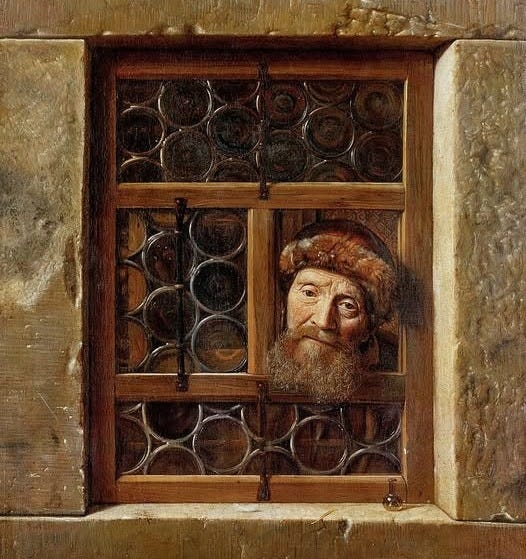
Interior Decorating Tips
I got a great response to my last article, “What Not Reading Does to Your Writing,” which looked at tics and deficiencies I see in prose from writers who do not read much fiction. I had quite a few professors, editors, and agents say they see the same issues in submissions and more than a few readers expressed distress at realizing they default to those same habits. To the latter group, I have two bits of advice. 1) Read a lot of good books. You will absorb good habits. 2) Don’t stress too much about having issues in your writing. This is what revision is for. Truly. No writer gets everything down in their first draft. Revision is exactly the place to balance out chapters, see what needs to be amped up or toned down, improved or cut. So, read and revise. Simple enough.

However, several readers asked me a more specific question: “How do you actually add interiority to scenes?” A lack of interiority isn’t the only feature of what I called “TV brain writing,” but it is the one that provoked the most questions. Other questions I saw asked whether using interiority “violates show don’t tell”? And does fiction really have to have interiority? I figured I’d answer these questions, as best I can. That means this will be more of a fiction 101 post than I usually write. These are things I consider basic, but there is nothing wrong with being refreshed on the basics. And sometimes what seems basic to one person isn’t to another.1
So, What Is Interiority?
In fiction, interiority is relating the internal world of a character to the reader. Their thoughts, feelings, hopes, fears, anxieties, memories, motivations, and so on. This is a simple yet consequential thing. Every one of us lives simultaneously in the external shared world and our own private worlds. These two realities are constantly colliding, separating, and distorting each other, whether that’s something as small as snapping at a friend because you are “hangry” or having a life-altering epiphany at the image of, I dunno, a dove flying over a lake that symbolically completes your character arc because you are a protagonist in a literary fiction short story published in a university literary magazine.
I kid, a bit. Still, it is true that our interior worlds are as vast as anything outside of them. If your fiction is missing interiority, it is leaving quite a lot out. This is true in a grander, philosophical sense yet also in a very practical craft sense. Readers tend to connect to stories through the emotions and desires of the POV character(s), and interiority provides that connection. The simplest story structure might be a character wants something but obstacles get in the way. This is a classic and powerful story, but only when the reader understands the character’s wants.
Interiority provides far more than just desires and goals. An interesting character will typically have a gap between how they act or speak and how they think or feel. Here’s an old CW class chestnut: In every scene, you should know what a character says they want, what they think they want, and what they really want. This can be applied to anything from prize-winning literary novels to pulpy superhero films. In this scene, the villain, Dr. Evilguy, says to the security guard that he wants to just use the bathroom but what he thinks he wants is to steal the blasto-ray 4000 omegagun prototype and conquer the city yet what he really wants, deep down, is to please the daddy that never loved them.
There are more things interiority provides than I could list here. One point I would hammer is that while visual media has many advantages over text, access to interiority is one of the advantages of prose.2 It is a form uniquely suited to exploring psychology and thought process. And it is usually smart to lean into the advantages of your medium.

Doesn’t Interiority Violate Show Don’t Tell?
Luckily for us, the Show Don’t Tell law has not yet passed Congress, much less been tested in court. There is no jail time for “violating” it. The prose prison doors are unlocked. Run free!
Look, “show don’t tell” is a fine rule of thumb. It is. In general—and with many exceptions and caveats—readers are more engaged by something they can visualize than something they can’t. “I’m mad” or “I was extremely mad” don’t give the reader as much to see as even a cliché like “She screamed and gripped the steering wheel until her knuckles turned white”. A general rule is not a commandment. It does not follow that showing is always superior to telling in every context much less that every sentence should be showing and never telling.
There are also things that cannot be dramatized in scenes and must be told through interiority. A character’s thought process, emotional arc, or the contrast between their hidden feelings and stated words. To pick a classic example, consider Kate Chopin’s “The Story of an Hour” in which the bulk of the story takes place in the character’s mind as she moves from despair at her husband’s death to the joyous realization that she will now be free as a widow in a way she never could be as a wife.
And there are entire modes of storytelling that prioritize telling over showing. Fairy tales, for example, and those have been popular for quite some time.

Lastly, I have always thought that “show don’t tell” is better thought of as meaning a visual image (or other sensory detail) will be more powerful than an abstraction. The distinction here is that you can provide a visual image to the reader in ways other than action3 and dialogue, most obviously through metaphor. Here’s a section of the opening of James Baldwin’s “Sonny’s Blues,” which has one of my favorite metaphors in literature. I do not think it would be improved by instead describing a bunch of the narrator’s physical movements and facial gestures.
It was not to be believed and I kept telling myself that, as I walked from the subway station to the high school. And at the same time I couldn't doubt it. I was scared, scared for Sonny. He became real to me again. A great block of ice got settled in my belly and kept melting there slowly all day long, while I taught my classes algebra. It was a special kind of ice. It kept melting, sending trickles of ice water all up and down my veins, but it never got less. Sometimes it hardened and seemed to expand until I felt my guts were going to come spilling out or that I was going to choke or scream. This would always be at a moment when I was remembering some specific thing Sonny had once said or done.
Must You Include Interiority in Fiction?
No.
If you have read my newsletter, you know that I love fiction for its protean form and infinite possibilities. Anything can be done. There is nothing you have to do. I write about books I love that have no real plot, have no real characters, deploy experimental structures, use illogical worldbuilding, or otherwise break “the rules.” My critique of what I called “TV brain prose” is that it seems to be a default mode of writing that lacks intention. Although, well, I can’t access anyone else’s interiority4, my impression is that the lack of interiority is not so much a conscious choice done to create specific effects and more something the writer just isn’t thinking about. Or not thinking about enough.
There are also intentional reasons to avoid interiority that should be avoided. Plot-focused authors—and especially the twist-focused author—may want to avoid spilling the [spoiler redacted5] or otherwise revealing information that would undermine the plot twists. Again, anything can be done. But this move is usually cheap and irritating. If your character knows something relevant, and we have access to their interiority, the reader should know it too. At the very least, you need a strong character-based or at least in-universe reason for the information to be hidden. Ishiguro earns it by having his characters be so repressed and restrained that, yep, you believe those buttoned-up Brits might block things out of even their own thoughts. If your only reason to have, say, a murderer who avoids thinking about the crime they just committed is because you don’t want to spoil the reveal of the killer, well, you might need to rethink your POV character.
What are good reasons to avoid interiority? (When there is truly no interiority in a third-person narration, this is called third-person objective6.) Since we relate to characters through their thoughts and feelings, a lack of interiority can productively distance readers from the characters. Make their actions seem more ambiguous and the story colder and meaner. Raymond Carver’s “Popular Mechanics” is a classic example. You most commonly read third-person objective storytelling in non-fiction, in journalism. Reporters craft a narrative by their selection and ordering of details and quotes, but they don’t editorialize and directly state their feelings. That is also an effect a writer can harness. Shirley Jackson’s infamous “The Lottery” would not have such a shocking ending if the story didn’t lull you into complacency with the removed, journalistic narration:
The morning of June 27th was clear and sunny, with the fresh warmth of a full-summer day; the flowers were blossoming profusely and the grass was richly green. The people of the village began to gather in the square, between the post office and the bank, around ten o'clock; in some towns there were so many people that the lottery took two days and had to be started on June 27th. But in this village, where there were only about three hundred people, the whole lottery took less than two hours, so it could begin at ten o'clock in the morning and still be through in time to allow the villagers to get home for noon dinner.
Interiority also isn’t a matter of yes or no. Interiority can be strategically added and removed to create interesting effects and moods. Another favorite very short story is John Cheever’s “Reunion.” It’s two pages, so go read it. But I’ll describe it too. This story opens with a long paragraph where the narrator, Charlie, relates how excited and invested he is in a visit from his father during a train layover:
He was a stranger to me—my mother divorced him three years ago and I hadn't seen him since—but as soon as I saw him I felt that he was my father, my flesh and blood, my future and my doom. […] I hoped that someone would see us together. I wished that we could be photographed. I wanted some record of our having been together.
After this wide window into Charlie’s feelings, his interiority drops out. The rest of the story relates scenes of his father being an asshole to a variety of waiters—Charlie doesn’t even speak—and getting them kicked out of restaurants. It is all action, description, and dialogue.
“I don't like to be clapped at,” the waiter said.
“I should have brought my whistle,” my father said. “I have a whistle that is audible only to the ears of old waiters. Now, take out your little pad and your little pencil and see if you can get this straight: two Beefeater Gibsons. Repeat after me: two Beefeater Gibsons.”
This goes on for some time until finally his short window time is up. Charlie says, “I have to go, Daddy, it’s late.” He leaves. The final clause is simply “and that was the last time I saw my father.” Although Charlie’s interiority isn’t related after the opening, you can sense his thoughts and the emotional devastation of realizing his father is a drunk asshole who can’t even make a real effort for his own child. But, you only feel that because of the interiority groundwork laid in the opening paragraph.
How Is Interiority Deployed in Fiction?
There are lots of ways to relate interiority, and most probably do not need much elaboration. A first-person narrator can simply speak in a monologue, state their thoughts and feelings, or describe their memories. A third-person narrator can either directly or indirectly7 relate their interiority. Plenty of famous works of fiction even open this way: “I am an invisible man” (Ralph Ellison’s Invisible Man). “If I am out of my mind, it’s all right with me, thought Moses Herzog” (Saul Bellow’s Herzog). “The grandmother didn’t want to go to Florida” (Flannery O’Connor’s “A Good Man Is Hard to Find”).
Even the “show don’t tell” tyrants are able to use interiority since it can involve action or dialogue. You can do this in memory:
In my younger and more vulnerable years my father gave me some advice that I’ve been turning over in my mind ever since.
“Whenever you feel like criticizing any one,” he told me, “just remember that all the people in this world haven’t had the advantages that you’ve had.”
(The Great Gatsby by F. Scott Fitzgerald)
Or in fantasy:
She nearly stopped forever just outside Ashton, because she came to a tiny cottage buried in a garden. I could live there all alone, she thought, slowing the car to look down the winding garden path to the small blue front door with, perfectly, a white cat on the step. No one would ever find me there, either, behind all those roses, and just to make sure I would plant oleanders by the road. I will light a fire in the cool evenings and toast apples at my own hearth. I will raise white cats and sew white curtains for the windows and sometimes come out of my door to go to the store to buy cinnamon and tea and thread. People will come to me to have their fortunes told, and I will brew love potions for sad maidens; I will have a robin…But the cottage was far behind, and it was time to look for her new road, so carefully charted by Dr. Montague.
(The Haunting of Hill House by Shirley Jackson)
When writing in third-person POV, you can also use a technique called “free indirect discourse,” which is the writing program jargon for moving into the thoughts or voice of a character without direct signaling like she thought or he felt. Direct: “I hate that stupid, ugly dog.” Indirect: She glared at Barkles and said he was a loathsome cur. Free indirect: She glared at the ugly mutt. What kind of idiot names their dog Barkles in the first place? To pick a real example, consider this passage from James Joyce’s “The Dead”:
He would only make himself ridiculous by quoting poetry to them which they could not understand. They would think that he was airing his superior education. He would fail with them just as he had failed with the girl in the pantry. He had taken up a wrong tone. His whole speech was a mistake from first to last, an utter failure.
So, I’ve said a bunch about what interiority is and looked at some specific examples of various types of interiority. How specifically do you deploy these? The possibilities are endless, but a few starting points:
Contradiction. Show that your character says one thing while they mean another. Explain how they hide their feelings, perhaps even from themselves. Reveal what they are behind the facade they show the world.
Variation. Most good scenes—though, as always, exceptions exist—offer a variety of narrative elements. Some combination of action, dialogue, description, interiority, etc. If you have a section of dialogue you want to break up, add some interiority instead of just action. If you want to pause the physical action, explore the mental action. Mix interiority in with description, dialogue, and everything else.
Addition. There’s no reason to think of interiority as separate from other elements. It can be interwoven with them in a paragraph or even in a sentence. We think while we act, remember while we look, and feel while we talk in the real world. Our characters can do so on the page too.
Tension. The stakes of the story depend on the emotions of the characters, and every scene will be more tense and dramatic if we know what the characters want. A long passage of increasing apprehension can also make the moment or revelation all the more powerful.
Information. If showing is often more emotionally powerful, then telling is often more intellectually powerful. If you are dealing with ideas, you probably want a lot of interiority. And in any event, telling can be a more efficient means of imparting information—whether about characters, plot, the world, or anything else—to the reader than showing something in scenes.
Immersion. We experience the world through the narrative perspective, which means interiority is an ideal place to immerse the reader in the tone and world of the story.

The Character Filter
There is another level of interiority that is the most interesting to me, which is using your character’s subjectivity as the filter for the entire story. Interiority isn’t merely the character’s thoughts and emotions. It is also how they see the world, summarize events, interpret actions, and describe settings. We all have different interests, ideologies, and identities. We can look at the same event and single out different details or eat the same food and prefer different dishes. Two roommates might describe the same living room in contrasting ways that reveal their different characters and feelings. “A cluttered, depressing mess filled with Jessica’s tacky trinkets and ‘inspirational art’” vs. “A cozy, peaceful place where you just feel relaxed…at least when Cheryl wasn’t moping about or reading aloud from one of the angsty poetry books she left strewn around the apartment.”
The point is we all experience the world filtered through our own interiorities. If your passage is in first person or close third, then everything from descriptions to summaries should be viewed through both that character’s physicality (e.g., what they can see) and the character’s interiority (e.g., how they see it).

This is something most writers know, but can easily be forgotten when writing. Even in first-person stories, I often see passages of summary that read more like a Wikipedia entry than a character speaking. “I drove into the town of Townville, which had a population of 40,000 people and was located between South River and North River outside of Centerville. Founded in 1934 by Edward Town, the town of Townville had once been home to a miniature town model factory that employed one third of the town during…” Unless your character is a local historian, that’s probably not how they think about the town.
A particularly amusing manifestation of this habit is when a writer gives extremely specific details about things like the makes of cars, the types of wood used in various furniture items, or the brand names of clothing pieces with no regard to the character’s mindset or knowledge base. I assume this stems from the idea that concrete details are always stronger. But details only work if they make character sense. “Tom was panicking. Someone had just stolen his dog! Poochie! No! Tom sprinted after the dognapper past a 2022 Ford F-150 in Carbonized Gray, two silver Kia sedans, a 2024 Lexus ES in Moonbeam Beige Metallic, a 2019 Chevy…” Unless Tom works in automobile manufacturing, then he is probably not aware of specific car models much less clock them as he sprints after his stolen dog. (On the other hand, the obsessive listing of designer clothing items in American Psycho fits into the shallow and status-obsessed mind and world of Patrick Bateman. It makes character sense and thematic sense.)
Filtering through your character’s interiority allows for much richer prose because the sentences are doing double duty. They’re conveying setting information or advancing plot or establishing atmosphere and they are deepening character. If you use your character as the filter through the world—and summarize and describe from their minds—you achieve the richest interiority. Make your character’s mind be the brush that paints the world.
My new novel Metallic Realms is out in stores! Reviews have called the book “brilliant” (Esquire), “riveting” (Publishers Weekly), “hilariously clever” (Elle), “a total blast” (Chicago Tribune), “unrelentingly smart and inventive” (Locus), and “just plain wonderful” (Booklist). My previous books are the science fiction noir novel The Body Scout and the genre-bending story collection Upright Beasts. If you enjoy this newsletter, perhaps you’ll enjoy one or more of those books too.

One humbling early moment in my teaching career was when I was rambling about interiority to some first-year college students until one of them stopped me. “Professor, we have no idea what ‘interiority’ means!”
Film and TV have their own ways to convey desires. When fans share powerful clips of favorite TV shows, it is often a character giving an emotional monologue where their facade breaks down. (Think of e.g., Tyrion’s beetle monologue or Jaime’s bath scene in Game of Thrones.) But film and TV have actors. A great actor can express great sentiment with a simple stare or smile. But you do not have an actor on the page. No amount of detailed descriptions of facial movements is going to turn your text into De Niro. Better to try a little interiority.
To be very clear, I do not mean “action” as in just fight scenes or car chases. “Action” in literature means any physical movements. A character sipping a cup of tea is action and so is one raising an eyebrow or picking a scab.
[Kids TV show host voice] Except in the magic of fiction!
Beans.
Third-person objective is creative writing jargon for the perspective that never enters the subjectivity (aka interiority) of any characters. This is the “camera on the wall” POV, where sights and sounds can be captured but nothing else. Third-person limited is when you have access to one character’s subjectivity. Third-person omniscient is when the author can move inside the heads of any character and for that matter inanimate objects or anything else. The author-god POV.
Meaning using tags like “he felt” or “she thought” or not using them.
I appreciate how you frame interiority as the animating force of fiction, specifically in terms of how desire and contradiction generate meaning. Your emphasis on intention over default habits resonates, too, taking me back to my MFA days. The idea that deepening interiority should be a deliberate craft choice, rather than an unconscious drift toward surface-level scene work, is something I continue to strive for in my own work. Thank you for a craft reflection that avoids being doctrinaire while still feeling essential.
Really enjoyed this. I'm working on interiority, show and tell, etc., right now as I revise a couple of manuscripts. It's eye-opening and feels like a "step up" in craft, or sort of like climbing straight up a mountain. Believe me, it's taking a lot of training and practice to notice bad tell, like cliché tell of emotions that maybe weren't even cliché when I started writing fiction a decade ago, but now have spread through authors and books like they've been franchised.