
Principles of Plotting Part IV: Intersection and Redirection
The fourth entry in a series on figuring out plot and applying it to your fiction

The Principle of Principles
Hello readers,
I’m pushing through to finish this Principles of Plotting series, so this Part IV post immediately follows “The Principles of Plotting Part III: Variation.” If you missed the other posts, I would read them in order as I explain the idea behind the series and also describe the principles in roughly descending order of importance. Here are the links to Part I, Part II, and Part III. I’ll repurpose my recap from the last post:
I find myself annoyed at both the vague literary world aphoristic advice1 and the absurdly prescriptive rules found in many genre and Hollywood screenwriting guides.2 So, this series is my attempt to offer flexible plot principles that can apply to (almost) any type of story. Or, at least any type of story that wants to have a plot. What is a plot principle that applies as much to a Kafkaesque novel as a Marvel romp? That applies to an experimental short story as much as a Hollywood romcom? In my first two installments, I went over how I’m defining plot3 and why I think authors—perhaps even especially literary/experimental/subversive ones—should pay attention to plot.
Part IV will be a two-for-one special with both Intersection and Redirection. As with the previous principles, these are meant as loose guidelines that are meant to generate ideas without stifling creativity. They don’t tell you what to do. They tell you what to think about before you decide what to do.

I’ll also note that these principles are not meant to be applied equally per se. Everything depends on the work in question. Maybe one story is driven by Escalation while another is structured around Oscillation. Perhaps a novel that you think will be powered by Variation needs to be revised toward Redirection. Stories are not static. I dislike anthropomorphizing art and acting like stories are living beings that “tell” the writer what they want. But, well, there is some metaphorical truth to that. Stories are neither planned constructions like houses nor organic things with their own wills. They fall somewhere in between with the writer needing to both impose planning and react to the developments that sprout during drafting. A good writer needs to be nimble and apply the principles that work for the particular scene and particular story.
Principle of Plotting #4: Intersection
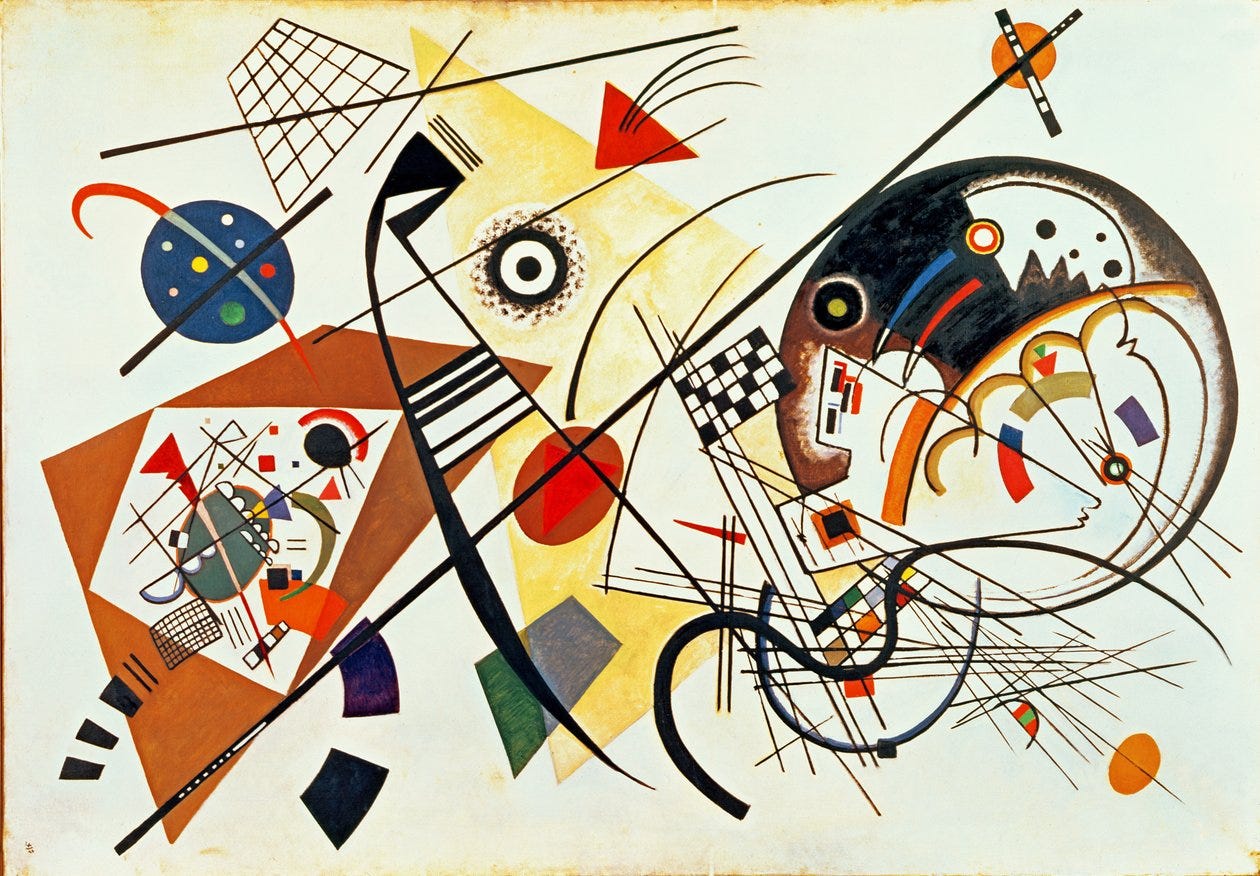
Intersection means that your various storylines come together in a satisfying way. By come together, I mean the storylines don’t merely get completed. They collide. They interact. They get entangled. Anyone can finish plot arcs and character arcs. The trick is having the various arcs work together to produce an even greater effect. As a clunky visual metaphor, see the image at the top where a fisherman pulls together different lines to drag up the fresh catch.
One of the worst sins a plot-forward story can commit is to drop plot lines. It is far easier to generate interesting story ideas or mysterious elements than it is to finish them. So, there is often a temptation to pull a Lost and cut the plot lines you can’t finish and then walk away whistling, hoping the reader doesn’t notice. This is a mistake both for ongoing storylines and for elements that are signaled as significant to the reader. (This is the real meaning of “Chekhov’s Gun,” aka that a gun shown in the first act must go off in the third. That’s not because a play needs a murder—although it rarely hurts—but because a gun placed prominently on a stage is something a viewer will notice and expect to see have a payoff.4)
Still, completing storylines is only step one. The more powerful and difficult thing to achieve is to bring the storylines together in a way that feels both surprising and inevitable. This normally means that the storyline trajectories intersect—thus Intersection—and affect each other. The arcs and plots weave together to form a complete pattern or picture. The ideal is that each part feels necessary. If you removed one, it would untangle the whole thing.
This principle is most important at the climax of the story. This is usually when the major storylines and characters come together to settle the “questions” of the work. But the principle is useful throughout a narrative. Some braided narratives, with two or three main POVs, might have the storylines intersecting at different angles from start to finish. A multigenerational epic divided into five parts might have a large point of Intersection at the end of each. Etc.
As always, the specifics of how Intersection should be deployed are dependent on style, genre, and the specific story you are telling. A detective mystery is expected to tie up all the loose ends5 and much of the pleasure of the story is retroactively seeing the skill with which the author constructed the puzzle. On the other hand, many forms of horror and weird fiction create eerie effects through a lack of clarity and finality. Still, most stories will have intersections of various kinds and if they don’t the reader will feel the author has been lazy or cheap.
(To preempt the angry comments: Yes, you can write great plotless fiction in which the various parts never touch. In such works, there is something else, like theme, creating cohesion. But this is a series on plotting and not on not plotting.)
Crossing Plot and Character Arcs
The cleanest and most classic form of Intersection is when the character arc crosses the plot arc around the climax. The protagonist completes their interior journey in a way that allows them to defeat their external obstacle (or vice versa). This is what Hollywood films, with their stricter structures, tend to aim for. The romcom lead learns to love themselves in a way that allows them to marry their crush and live happily ever after. The superhero embraces their responsibility in a way that allows them to blast the big baddie back to kingdom come. Think of the original Star Wars in which Luke Skywalker embraces his destiny as a hero through accepting the power of the Force, which literally gives him the ability to hit the tiny target and destroy the Death Star and save the universe. Celebration. The end (until the sequel). A similar dynamic plays out in The Matrix and most other Chosen One narratives (again, until the sequels).
As always, these principles apply to all sorts of works, not just blockbuster films. Intersection doesn’t have to happen in a heroic, save-the-world way. You simply have the plot arc and character arc—or if you prefer external struggle and internal struggle—wrap around each other. In a story like William Carlos Williams’s “The Use of Force,” the external conflict (the doctor is trying to examine a young child’s mouth) and the internal conflict (the doctor is losing his professionalism and becoming animalistic in the physical struggle to open the girl’s mouth) collide in the titular use of force. In Octavia Butler’s “Bloodchild,” the protagonist’s plot question (will the young boy be impregnated with centipede monster larvae?6) and character arc (moving from naive passive child to someone with agency) are resolved together. Etc. Obviously, these are reductive readings of stories which are doing many more things. Arcs are only the spines of the stories, but there are plenty of other bones plus the meat, skin, and organs.7
The Star Wars example is one in which the character arc changes the trajectory of the plot arc. It can work in reverse too.
In my post on Variation, I brought up Lesley Nneka Arimah’s “Who Will Greet You at Home,” a fabulist story about a world in which babies are made from inanimate material like mud, yarn, and porcelain. (Spoilers ahead.) The protagonist, Ogechi, is poor and made from mud and twigs by her own mother. Her desire is to have the kind of delicate child a rich person has, which is to say the opposite of someone like herself. This causes her lots of grief and pain because these delicate babies are easy to kill and also her horrible boss literally leeches her joy in exchange for the magic necessary to bring life to the babies. Ogechi ends up making a demonic baby out of hair clippings—a fable within the fable warns us of the dangers of hair babies—which becomes the central plot line. The hair baby causes more and more problems, including killing her coworkers, until Ogechi finally kills the demonic baby. The story ends with Ogechi making a new baby out of mud aka the type of baby her mother made and what she has always run from: “Let this child live in sorrow. Let this child not grow into a foolish, hopeful girl with joy to barter. Ogechi formed the head, the arms, the legs. She gave it her mother’s face. In the morning, she would fetch leaves to protect it from the rain.”
The Storyline Tie-Up
The above describes stories with one protagonist and one main plot line. Many stories have far more plot lines and POV characters to weave together. In truth, even aforementioned action films like Star Wars and The Matrix have several strands to wrap up. Luke is only in the position to save the day because Han Solo completes his arc from selfish smuggler to freedom fighter and Neo is only revived because Trinity embraces her feelings for Neo.
There is a unique challenge presented to stories with several main storylines and different POVs. In such works, you might still want to have the character and plot arc of each character cross but you also need to have the various storylines collide. Potentially, this could be merely thematic but normally it is going to be more literal: your POV characters will appear in the same place and/or act in ways that affect the other storylines causing some level of chaos, closure, comedy, or tragedy.
The more storylines and POV characters you have, the trickier this becomes. If you don’t believe me, ask George R. R. Martin.8
Earlier this year, I published an article about what I called “TV brain prose,” aka writers who seem to be thinking in TV/film scenes instead of leaning into the unique possibilities of prose fiction. Some readers misinterpreted this as me saying TV and film suck and/or shouldn’t be an inspiration for fiction. I didn’t mean that at all. Like just about everyone, I love movies and (good) TV. Anyway, the storyline tie-up is something that TV does very well. Think of more or less any sitcom like Seinfeld. Any given episode will have several storylines that might be separate for much of the episode. Maybe Jerry and George are caught up in relationship troubles while Elaine is plotting something at work and Kramer is hatching some wacky plan. Whatever the storylines are, they come together. Kramer’s goofiness ruins George and Jerry’s plans which makes them unable to assist Elaine, leaving everyone in a mess. The storylines don’t merely end. They intersect.

In a different mode, examine Shakespeare’s tragedies in which the various storylines come together for tragic purposes (e.g., Romeo and Juliet parallel schemes to be together ironically lead to both committing suicide). Or how an epic fantasy series like The Lord of the Rings separates the main characters in various combinations for long stretches yet brings them together at the climax to collectively save the realm.
Since Intersection is expected, it helps create tension and interest for the reader. I mentioned before that many braided narratives intersect throughout but others will present seemingly unrelated storylines that prompt the reader to wonder just how on earth they will merge. An example would be Haruki Murakami’s Hard-Boiled Wonderland and the End of the World, which takes place half in a surreal fantasy world and half in a cyberpunkish future. How are these two seemingly different stories related? That question is part of what keeps you turning the page.
Principle of Plotting #5: Redirection
I’m grouping Redirection with Intersection because they are often entwined, as some of my examples above show. Luke Skywalker’s character arc intersects with the plot arc, changing the direction from All Is Lost to The Day Is Saved. Ogechi’s exterior world struggle causes her to reverse her character, embracing the very thing she’s run from the entire story. Romeo and Juliet’s opposing plans smack into each other, sending them both from romance to tragedy.
But Redirection isn’t only about storylines intersecting. Redirection is about artfully shifting the story into new terrain. A few times I’ve pulled out the phrase “surprising yet inevitable,” a principle usually applied to endings yet I think applies throughout a story. We want the parts of a story to feel like they follow from what comes before. That they are logical not in the sense of mathematical logic but storytelling logic—the math of characters, aesthetics, and themes. The story grows from the seed of the beginning into the sapling of the middle and the blooming tree of the ending. Yet at the same time readers want to be surprised. If we can predict everything that is going to happen, why bother continuing to read?

Redirection is one way to think of adding satisfying surprise to a story. It is similar to what I called Oscillation, but Oscillation is a more frequent back-and-forth movement that powers the story along. Redirection is a larger change in trajectory. Oscillation is pedaling right and left to move the bike forward. Redirection is making a sharp turn to ride into new terrain. That turn might even be a doubling back and the new terrain the old terrain, but changed. The triangle of Freytag’s Pyramid is only one plot structure shape. Another is the circle seen in everything from Campbell’s “Hero’s Journey” to Dan Harmon’s “Story Circle.” We return where we start, but with the hero and/or the world changed.
Plot Hinges
On the larger structural level of a story, Redirection is pivotal to the beginning, middle, and ending in different ways. Here we might even return to the old Freytag’s Pyramid that I’ve both critiqued and defended before.
This traditional story structure has three main plot hinges, in which the story and character’s directions shift course.
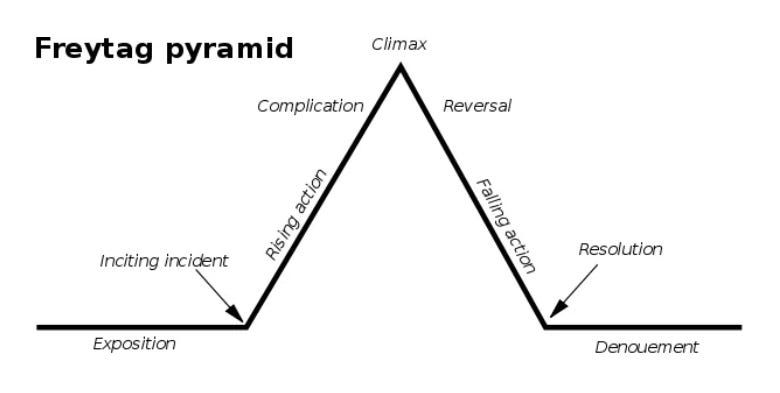
A classic beginning is to start in the “normal world”9 that gets sent in a new direction by the inciting incident. This might be your old “a stranger comes to town” (e.g., Uncle Charles’s appearance disrupting the equilibrium of the Blackwoods in Shirley Jackson’s We Have Always Lived in the Castle) or equally old “a character goes on a journey” (e.g., the man and child have to flee in the post-apocalyptic wasteland of The Road).
The middle, in Freytag’s model, is when the hero’s fate switches from rising to falling (e.g., the banquet scene in Macbeth is the pivot from Macbeth seeming to rise in power to his unraveling). Note that “climax” is used differently in Freytag’s model than we use it today. He means the pivot point and not the final fireworks. Many stories will feature a major setback at the hinge in which the protagonist not only has another obstacle to pass but one that defeats them. Other stories may have the character treading water happily in the middle until something redirects them toward success or failure. The middle is where the character is sent hurtling toward the end.
And the very ending is the dénouement, which is often a Redirection of the story that ends on a slightly different tone or leads the characters to a different place. The triumphant climax of Sauron’s destruction in The Lord of the Rings leads to the bittersweet actual ending of the Scouring of the Shire.
Of course, you may choose a different model the three-act beginning/middle/end. Perhaps you prefer a four-act kishotenketsu or the five-act screenwriting structure. Maybe you think of “acts” as “parts” or “books” or something else. No matter how you are dividing the units of your plot, what will make them feel like distinct and necessary units is if they redirect the story. If they can be removed without affecting the overall story shape, why are they there at all?
Character Pivots
The above are plot-oriented means of Redirection. But Redirection in character and interiority can be just as powerful and important. One elegant form of the character pivot is when the character doubles back to the beginning. The example I gave above of Arimah’s short story achieves this. Ogechi ends by embracing what she ran from at the story’s opening. She is rerouted into reverse. Part of the reason to circle back to the start is that it helps the turn feel—yes, again—surprising yet inevitable. A reader is less likely to feel a Redirection is cheap if the shift was foreshadowed.
Another satisfying character Redirection can be described this way: “the character gets what they want only to realize it wasn’t what they needed.” Many stories of ambition work this way from The Great Gatsby to The Devil Wears Prada. The character wants the big job, only to realize it takes over their life. Or they want success and wealth, only to realize that power corrupts and they were happier before. Or they achieve what they hungered for only to realize the hunger doesn’t go away and they want more and more.
Other Trajectory Shifts
These are just a few methods of Redirection. There are endless variations. In a work like Susanna Clarke’s Piranesi, it may be the reader who wants the character to escape their situation even though the character seems happy to stay. When—spoilerish comment—the protagonist is left in an ambivalent state at the end, perhaps it is the reader that is redirected.
I’ve stressed that these principles are meant to be loose enough to apply to everything from formulaic bestsellers to experimental work. One example of a more surreal artist whose work often features extreme Redirection would be David Lynch in films like Lost Highway (the complete switcheroo in the middle) and Mulholland Drive (closer to the two-thirds mark).
Redirection might take the shape of shifting the story to a new plane that reorients everything that comes before. The blunt version of this is the twist ending. But there are subtle ways of twisting, such as how John Cheever’s “The Swimmer,” and other means of redirecting to a new plane. You might shift focus, zooming in to highlight the most important element or else telescoping out to place the story in a wider view. Or you might do both at the same time, such as when Donald Barthelme’s “The School” shifts from a catalog of things that have died at the school over the course of a year to a philosophical debate about the meaning of death during one class.
Applying these Principles
Okay, those are my core Principles of Plotting: Escalation, Oscillation, Variation, Intersection, Redirection.
As I mentioned above, the idea is not that you should apply these principles in some equal way. Some might not apply well or perhaps even not at all to a given story. And you may have other things you focus on that make your stories work for you. Whatever works is what works. These principles are ones to keep in mind when things are not working. When you are looking at a scene or a segment or a story and thinking it’s flat, inert, treading water, or just ambling about. Maybe that flat opening chapter needs Escalation. Perhaps when the directionless middle of your story needs more Oscillation. It could be that the ending your beta readers dislike needs a radical Redirection. Possibly Intersection is the key to fixing the muddled mess of your final chapter.
I’ll repeat what I said up top: These principles aren’t meant to prescribe what to do. They suggest what to think about before you decide what to do.
At least, that’s how I use them. I hope it is useful for some of you too.
Next time, I’ll talk about other ideas of plotting (from other authors) that I’ve found useful. Some of these might contradict or clash with mine. That will be intentional. There are no rules in fiction.
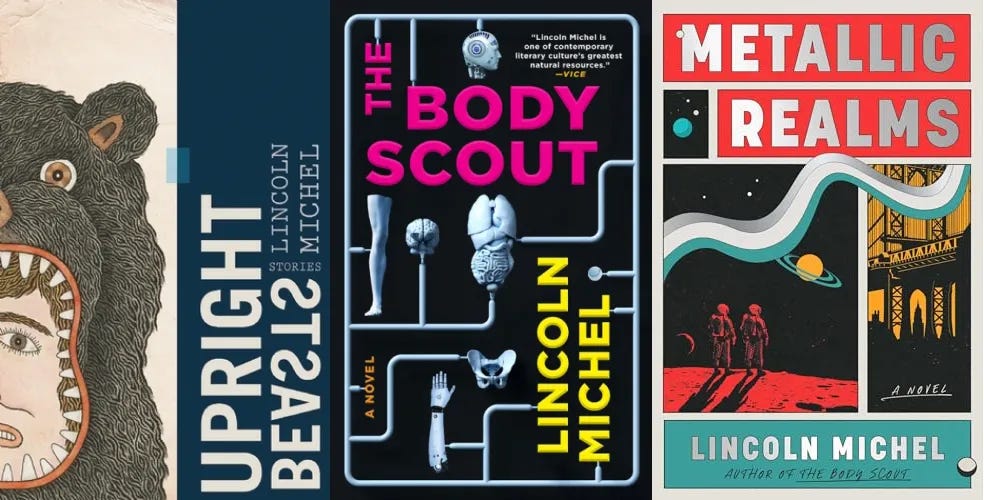
My new novel Metallic Realms is out in stores! Reviews have called the book “brilliant” (Esquire), “riveting” (Publishers Weekly), “hilariously clever” (Elle), “a total blast” (Chicago Tribune), “unrelentingly smart and inventive” (Locus), and “just plain wonderful” (Booklist). My previous books are the science fiction noir novel The Body Scout and the genre-bending story collection Upright Beasts. If you enjoy this newsletter, perhaps you’ll enjoy one or more of those books too.
“Write what you know!” “Show don’t tell!” “Every story is either a man going on a journey or a stranger coming to town—and they’re two sides of the same story!
“Save the Cat says Theme Statement occurs at the 5% mark during the 10% Set-Up stage that ends with the Inciting Incident at exactly 11%!”
Roughly, I’m defining plot as the cause-and-effect sequence of exterior world events as well as the relevant interiority related to the cause-and-effect events. Basically, plot arcs plus character arcs. In this schema, “plotless fiction” is when exterior events and interior thoughts do not tie together in a cause-and-effect way into a larger story. This is descriptive, not pejorative. I love many plotless—or at least minimally plotted—works of fiction such as Invisible Cities, The Mezzanine, Outline, or [one could go on and on] and write about them frequently.
Sometimes, Chekhov’s Gun is used to mean every detail must have a payoff or point. I don’t agree there. But it is useful to apply to elements that feel prominent due to their placement, emphasis, or space in the text and/or their inherent attention-catching interest. There’s a reason it’s Chekhov’s Gun and not Chekhov’s Refrigerator Magnet.
Yes, yes, some things can be dropped. Raymond Chandler famously didn’t know who killed the chauffeur in The Big Sleep. But, Chandler always settled the major questions.
Yes, it is a weird (and great) one.
Maybe thinking about “Bloodchild” before breakfast has made me hungry…
I’d submit the main reason George R. R. Martin has struggled to finish A Song of Ice and Fire might not have anything to do with the TV show but that he has way too many plot lines to wrap up and character arcs to complete. His already large cast and multilayered story was doubled or tripled in books 4 and 5, leaving a seemingly impossible number of strands to weave together.
Scare quotes to indicate I mean whatever is normal to your characters, even if that’s a fairy tale fantasy or a science fiction future.
I'm going to make a comment here I would not on an open social media platform.
When WorldCon was in DV several years, I read the Hugo nominees. Seanan McGuire had a Wayward Children novella nominated. I felt it read like an early draft, precisely because of issues with intersection. The early part of the story deals heavily with the MC learning she's intersex -- and then that point completely drops out of the rest of the book.
When I brought up this criticism, her rabid fans screamed REPRESENTATION. My problem had nothing to with representation, which I'm all for. It was a technical issue about the way structure, not some regressive political nonsense.
When you're putting out that much material, corners get cut. I have no desire to try to support myself with my writing. Part of it is that my work is too odd and cerebral for mass appeal, and another part is, I make almost $130k at Metro, and the numbers, and that number (along with benefits) is well beyond what even most commercial writers make. But it's also a matter of something that Gene Wolfe once said, which is that having a stable, sufficient income allows you to make your art to your standards.
At my day job as a technical writer, I do professional work, but it's in service of an organization and their prerogatives. The compromise I've made between my ASD/OSD and the world is that I do that to survive, but my art is done to my standards.
Oh, intriguing words…