
MFA vs. Publishing Round 2,000
Some quick thoughts on the unending MFA discourse, LLM books flooding publishing, and other things.


There were a couple pieces of book world discourse over the last week that I wanted to respond to without writing entire posts about them. So, I’m going to group them here. Before I get to those…
In Personal News
I had a great time chatting with Austin Wilson at the Ledger podcast about writing novels, interiority, and my article on “TV brain prose.” Give it a listen!
Also a reminder that I’m running a subscription incentive for the rest of March to celebrate five years of Counter Craft. If you upgrade to an annual subscription (or extend a current annual subscription), I’ll mail you a signed copy of one of my novels or one of the anthologies I co-edited. This is limited to readers in the United States for purely postage cost reasons.
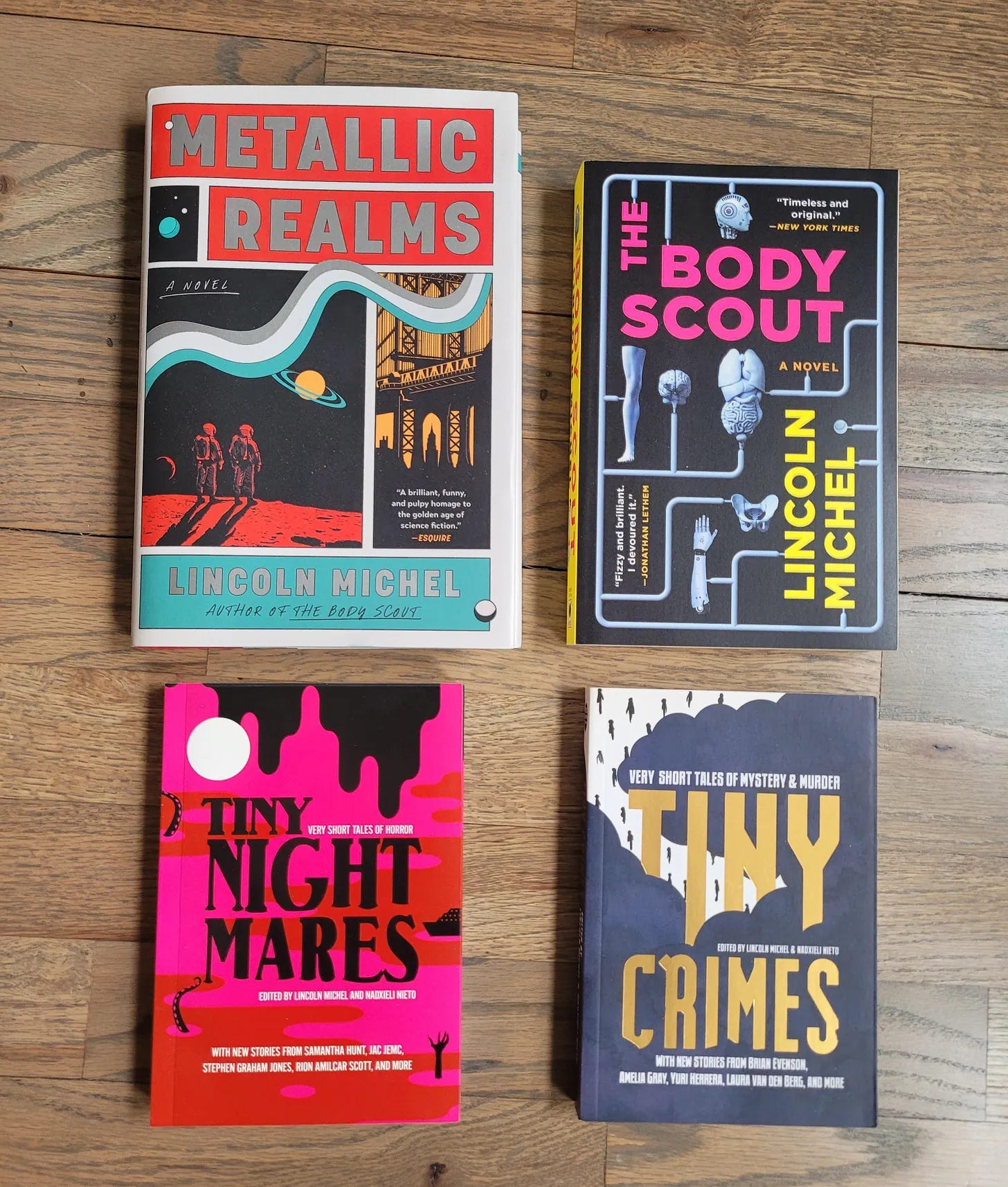
Just shoot me a message when you subscribe with your mailing address and the book you’d like. The options are:
Metallic Realms (satirical space opera meets autofiction novel)
The Body Scout (science fiction / cyberpunkish noir novel)
Tiny Crimes (anthology of flash crime/mystery stories from Brian Evenson, Laura van den Berg, Charles Yu, and more.)
Tiny Nightmares (anthology of flash horror tales from Stephen Graham Jones, Jac Jemc, Kevin Brockmeier, and more.)
MFA vs. Publishing
Much of my feeds, on Substack and elsewhere, have been taken up with eternal MFA debates. This round was kicked off by a Paris Review interview of Sarah Schulman conducted by Parul Sehgal. Schulman is a very interesting writer and Sehgal a great critic and interviewer, so you should read the whole interview for its merits. But one comment of Schulman’s about MFA programs and the publishing industry made the internet rounds. Schulman seems to imply that MFAs are determining what is published—“The M.F.A. system is currently both dominant and incoherent, and as a result, American literature is filled with repetition.”—says MFA professors are “working for free for the Big Five,”1 and even suggests that MFA directors should “convene” to collude and change “what we feed into the industry.”
There are two interrelated myths here, in my view. That MFA programs have a vast influence over the writing MFA graduates produce and a vast influence on what is published in the marketplace. I see these kinds of claims all the time, especially here on Substack. Often, the claim is that MFA programs are to blame for the state of literature and by extension why no one reads anymore. The reasons suggested are… contradictory. “MFA programs destroyed literature by making everything dense snooty postmodernism that no one enjoys reading!” “Actually, it was by making everything populist slop written to be adapted for film or TV!” “No, it was by making all literature woke and political.” “Wrong! It was because the CIA instructed MFA programs to make all literature unpolitical!” Etc.
This is all a bit backwards, from my vantage.
The state of literature is far more influenced by larger societal factors—fractured media ecosystem, declining reading rates as entertainment options multiply, LLMs, smartphones, the gig economy, etc.—than whatever is taught in an MFA workshop. MFAs do influence literary fiction, but I think we often forget what a small (and sadly shrinking) slice of publishing that is. The trends that dominate contemporary publishing—Romantasy, James Patterson thrillers, LitRPGs, BookTok novels, Harry Potter fan fics getting the serial numbers filed off and sold to for huge advances, etc.—are not the spawns of MFA programs. Nor are the long-standing genres like Romance and Mysteries that make up most of what is published in a given year.
I’ve seen several people claim that big publishing itself is filled with editors, publicists, and marketers who hold MFAs. This is not the case. Exceptions exist, but it is rare for someone working at a Big 5 publisher or a big independent press to have an MFA. There are some pipelines to publishing, including university-run publishing programs, but they are disconnected from MFA programs. I don’t believe any editor or agent I’ve worked with on any project has held an MFA. They’re rare in publishing.2 (When I posted a comment to this effect on Notes just now, several publishing professionals on Substack agreed. So, you don’t just have to take my word for it.)
Put it this way: If you grab a random book off a bookstore table, the odds are that no one involved—from author and agent to editor and publicist—has an MFA degree.
Publishing Influences MFA Programs More than the Reverse
I assume what Schulman and others mean by “American literature” is restricted to the small terrain of literary fiction. Even there, I think people have the causation backwards. MFA programs don’t shape what is published; what is published shapes what MFA (and non-MFA) authors write. Especially when we are talking about the Big 5 in the year 2026.
This should be obvious from the fact that MFA programs focus on poems and short stories3, both of which are almost impossible to sell to big publishers in 2026. Trends that take off in publishing are echoed in MFA programs. Of course they are. MFA students are pretty likely to read contemporary fiction. But the influence typically comes from what is published, acclaimed, and selling. Case in point: literary fiction has arguably been dominated by genre-bending or speculative literary fiction this century. Yet MFA programs famously were, and in many cases still are,4 hostile to genre fiction. The reason books like Cormac McCarthy’s The Road, David Mitchell’s Cloud Atlas, or Emily St. John Mandel’s Station Eleven—none of whom attended an MFA program—were published isn’t because a cabal of MFA directors sat in a dark room and picked genre-bending fiction as the next trend. But the success of such novels in both sales and acclaim inspired many younger writers in MFA programs to write similar things. And even more so, the success inspired publishers to publish more books in the same vein.

[Editing to add: One thing I should note is that the situation was different decades ago, back when literary fiction sold better, book review coverage was robust, and you couldn’t simply look up authors on the internet. But, we don’t live in that publishing world anymore.]
In general, people overestimate the influence of MFA classes on what writers write. A typical MFA program is a couple workshops and a few classes over two years. That will never be as influential as the lifetime of reading and writing before and after those years. I occasionally teach in MFA programs, and I do not see students getting their prose smushed into some imagined MFA mold. They tend to write the kind of work they loved before the program. That’s often literary fiction—MFA applicants are self-selecting after all—but not infrequently it is YA fiction, SFF, or other work rarely taught in MFA programs at all. That doesn’t mean students don’t learn things. But I think they learn to identify techniques they enjoy and hone the aesthetics they already preferred.
Speaking personally, if you read my books and then hopped in a time machine to look at teenage Lincoln’s bookshelf, you wouldn’t be surprised at all. I was reading a mix of weird/surreal literary fiction (Borges, Calvino, Kafka, Barthelme), New Wave SFF and cyberpunk (Le Guin, Gibson, Butler), hardboiled noir (Chandler mainly), and a host of other authors (Nabokov, Carver, Jackson, Marquez) whose influence is clearly stamped on my work today. Sure, I was introduced to some new influences in an MFA program—and have discovered heaps more in the years since—but the core of my aesthetics and preferences were formed when I was younger. I imagine that is true for most writers.
This Isn’t to Say MFA Programs Don’t Influence Literature or Careers, For Good or Ill
None of this is to say MFA programs aren’t influential to individuals or to literature. First, and most importantly, MFA programs provide time and space to dedicate yourself to your craft with a group of likeminded peers. Sometimes, you even get paid to go! So, they help a lot of writers. Time and space to practice and grow are useful for any author, whether you find that in an MFA program or outside of one.
What about the purely careerist advantages of an MFA? Most practically, it is a terminal degree and so allows you to teach at the college level.5 For some agents and publishers in the literary fiction space, they may signal a certain level of experience and dedication. But mathematically, far more MFA graduates exist than will ever get an agent or sell to a big publisher. It’s something that might help your debut manuscript get a closer look from agents. It won’t do a lot more than that. Indeed, any value an MFA might hold to some agents or editors immediately evaporates after your debut. After that, you will be judged by the same factors as any writer: sales track, comps, platform, and so on.

Perhaps the biggest career advantage is simply having a community of peers who may continue to share work, provide advice, refer each other, and so on. Cynically, networking. But this is also the main career advantage of the popular alternatives to an MFA: writing groups, working at magazines, Clarion6, etc. I don’t love the cronyism and careerism in publishing. But, we cannot pretend it is restricted to MFA programs or literary fiction by any stretch. There is every bit—and in many cases far more—cronyism, favoritism, and influence peddling in SFF, Romance, and other parts of publishing.
MFA programs have proliferated in recent decades and tons of writers go through them. So, they have certainly had an effect on American literary fiction, good or ill. It just isn’t by determining what corporate publishing puts out or what readers buy. I’d suggest it’s closer to the opposite. Their influence is in creating a space for literature without a focus on commercial concerns. A place where writers can spend time with likeminded peers (and ideally receiving a small stipend) to focus on their craft while perhaps editing a small-circulation lit mag or interning at a non-profit press dedicated to translated literature. Some will view this as a beautiful thing that preserves and promotes forms of literature that wouldn’t exist otherwise in a culture controlled by corporate algorithms and filled with slop, both human and LLM. Others will view it as a big waste of time that produces authors who can maybe write a decent lyrical short story that appears in a university lit mag but not anything that will sell to a wide number of readers.
To each their own.
If I was to guess what would happen if you evaporated every MFA program in the country, the biggest result would be the near total disappearance of literary short stories.7 The effects on Big 5 publishing would be minimal, and the effects on bestselling fiction almost nil. The idea that it would produce some great new literary culture where millions of people stop scrolling TikTok and watching Marvel movies to rush and support a renaissance of popular and innovative literary fiction… well, that seems like a bigger fantasy than whatever Romantasy series is dominating the bestseller list today.
An MFA Alternative: Working in Publishing?
Speaking to one big five editor about this topic, they brought up something that wasn’t on my radar and that I fear will cause even more despair among writers who feel publishing is already too hard to break into and too much of a “who-knows-who” system. Perhaps skip this section if you fit that description.
Apparently, a fair number of people who work in publishing are selling novels these days. Mostly in upmarket fiction and commercial genre fiction. The editor said it made a lot of sense if you think about how hard it is to get coverage these days. Publishers are looking for safer bets, such as successful self-published authors or authors with large platforms. In this environment, someone who has run successful campaigns for other authors is likely to have a game plan and connections to sell their own book.
This editor even suggested working in publishing wasn’t a bad alternative to an MFA program, as long as you worked in part of publishing that reads lots of manuscripts, meaning editing, marketing, or publicity. “You’ll learn a lot and get paid instead of going into debt.” (When I replied that a lot of MFA programs are funded and give students a stipend, they said, “Well, I don’t actually know anything about MFA programs.” Which perhaps speaks to what I was saying before.)
Speaking of Publishing: Slopocalypse Now!
Recently, I wrote about the tsunami of slop books coming to publishing. Well, here are some depressing numbers. Publishers Weekly just reported that the total number of books published in 2025 topped 4 million. That’s a sharp 32.7% increase from the previous year. As you might guess, the number is driven entirely by self-publishing which accounts for 3.5 million titles. (Self-publishing titles had been holding fairly steady at around 2.5 million8 in the years before ChatGPT came out.) Publishers Weekly doesn’t state AI has enabled this increase directly, only quoting Bowker’s Andrew Kovacs alluding to unspecified “new tools” that make every aspect of publishing easier. But, I’d bet money LLMs are powering the surge.


Note that this does not mean that readers are seeking out LLM-generated books. Self-publishing marketplaces are overrun with AI-generated imitations of popular books, presumably churned out in vast quantities on the hopes that a few readers will be tricked. Sometimes these merely imitate the cover styles, genre tropes, or other features of popular books. But often they are straight-up AI dupes (see Seth Harp’s tweet above). When these books are flooded into the Kindle Unlimited store, the grifters can make money even if every reader quits after a half-dozen pages. KU authors are paid by page read, and even a handful of pages adds up multiplied across hundreds or thousands of titles.
Whenever I mention this slop wave, a few people seem to think I’m slagging self-publishing. I’m not. The reason self-publishing was always at risk of drowning in AI text is entirely logistical and financial. It costs next to nothing to spam the Kindle Unlimited with 1,000 AI-generated ebooks or POD books. It would cost a ton of money to traditionally print 1,000 titles, even in small runs, and the various layers of gatekeepers from editors to bookstore buyers make that grift impossible. At least for now.
Anyway, I tried to offer some more hopeful advice to this slop tsunami here:

I have no tidy way to end this post so, well, I’ll just say see you next week when I promise to talk about something other than MFAs or LLMs.
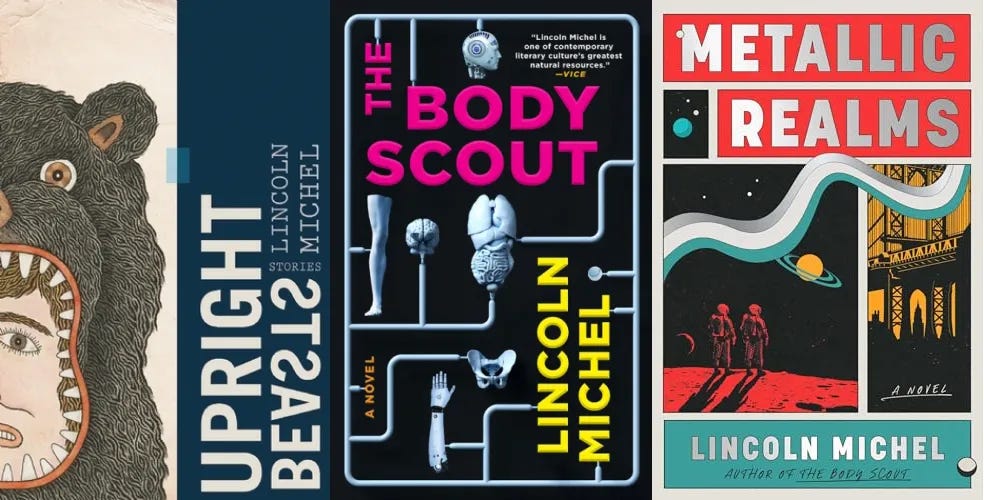
My new novel Metallic Realms is out in stores! Reviews have called the book “brilliant” (Esquire), “riveting” (Publishers Weekly), “hilariously clever” (Elle), “a total blast” (Chicago Tribune), “unrelentingly smart and inventive” (Locus), and “just plain wonderful” (Booklist). My previous books are the science fiction noir novel The Body Scout and the genre-bending story collection Upright Beasts. If you enjoy this newsletter, perhaps you’ll enjoy one or more of those books too.
I assume what is meant is that since editors don’t line-edit as much as they used to (true), MFA professors are essentially doing the editing for books that will be published.
A caveat is that publishing workers with MFAs are more common at small and non-profit presses, for probably obvious reasons. But in the big 5 or big independent presses that dominate publishing, they are rare.
Mostly because these are logistically easier to workshop than novels.
The programs I’ve taught in are exceptions. My speculative fiction classes typically hit their caps in part because students recommend my classes to each other… but also because there just aren’t as many speculative fiction offerings to meet student interests.
Sadly, that tends to mean being paid a couple thousand bucks to adjunct one class a semester these days…
Clarion and Clarion West are popular science fiction and fantasy writing programs that don’t provide a university degree.
Especially since most lit mags are connected to universities or else started by MFA grads.
A high of 2.7 million in 2020, during COVID lockdown. Drop to 2.1 million in 2021 and slight rise to 2.6 million in 2022.
first time caller long time listener. this is all reasonable/reasoned and fine but i truly cannot fathom the appetite on this website for arguing about MFAs. if people just sat down and read and wrote in the time they spent yelling/attending to yelling re MFA vs DGAF on the internet they would not need writing school
For whatever it’s worth to the despairing reader who feels it’s already too hard to break in, I did it by self-publishing first (well… after years of not being able to break in any other way), building up an audience that way, and then—just when I was completely satisfied with my writing career and loving the indie life, with no intention of messing around with publishers ever again—the publishers started coming to me and making me offers that were hard to refuse. So I don’t think the difficulty of breaking in should hold anyone back. As you noted in your excellent punk rock article, this is the DIY era, and I believe it will only get more DIYish as technology rapidly advances, so DIY and see what happens. Maybe it’ll turn out to be the path into “real” (ugh) publishing after all.