

I’m deep in the novel revision mines—Haunted Hills coming to you next year!—so this article will be on the shorter side. I wanted to relate a little publishing industry gossip and then explain why book sales can be so confusing.
Some Market Trend Gossip
The word on the street, as the kids no longer say, is that Romance and Romantasy sales are starting to tank. The market is so oversaturated, and so much of what publishers are putting out is bad, that readers are being put off. I’ve heard about bookstores overrun by a flood of books with the same tropes, Big 5 editors overwhelmed with barely distinguishable submissions, and foreign publishers uninterested in buying rights. Adult non-fiction is also doing poorly, which has apparently been true for a few years.
My thought: The Romantasy issue was predictable since publishers rushed to throw huge advances at anything called Romantasy and much of it was written by authors “pivoting” from their established genres to jump on the trend as quickly as possible. Some publishers were also pressuring authors to rewrite their books in adjacent genres (YA and various SFF subgenres) so they could be marketed as Romantasy. The bubble was bound to pop.
What’s doing well? Mysteries, “anything speculative,” and fiction aimed at Baby Boomers, especially featuring heartwarming late-in-life transformations. The last bit is driven by the huge sales of Virginia Evans’s The Correspondent and Allen Levi’s Theo of Golden,. This is also perhaps a predictable trend. Older generations read more, have more free time, and more disposable income in this economy than younger generations.
Anyway, brb. I need to quickly rewrite my proposal for my three-volume The Dragon Smoochers series into the standalone novel called Mr. Mystery’s Magical Late-Life Lessons before the publishing winds change again…
Why Book Sales Are Confusing
There’s been some lit world discourse about book sales, spinning off of New York Mag’s Book Gossip column reporting that Lindy West’s much-hyped memoir isn’t selling very well: “According to BookScan — the leading industry tracker that captures mostly print sales and with a week or so delay — total Adult Braces sales stand, as of this writing, at just over 3,000 copies.” The article goes on to note the memoir sold “only” 1,800 copies in the first week compared to 7,000 copies of Strangers, another buzzy memoir.
I put “only” in scare quotes because 1,800 copies in a week is a lot of books in most circumstances. Very few books sell that many in a week, and the majority never sell that many at all. But is it a lot for a memoir from a famous author who got infinite media coverage (and probably a very high advance)? Not really. One truth here is that there has probably never been a bigger gap between “the discourse” in traditional media and actual sales. Magazine and newspaper coverage just doesn’t move books like it used to, for better or worse.
Anyway, I haven’t read West’s work and have no opinion about it. But I saw a lot of people pointing out there can be a huge gap between BookScan sales and actual sales. And I saw others ask, why is that? So, here’s a quick primer on why BookScan data is different from an author’s royalty statement.
What BookScan Tracks
Circana’s BookScan is an industry tool that tracks “point of sale” purchases—that is, a customer buys a book from a retailer like an indie bookstore or Amazon—and claims to cover about 85% of print sales. [Note: Nick Mamatas in the comments points out they only claim 85% of “trade print sales,” which could exclude sales at e.g. toy stores and gift shops.] BookScan tracks this by having retailers directly report their sales based on ISBNs. This is the number journalists report because it is the only number they have access too.
I saw a few people claim BookScan misses online retailers like Amazon. That’s not accurate. BookScan tracks all the major retailers from Amazon to Target as well as several hundred independent bookstores. But they don’t capture everything…
What Sales BookScan Leaves Out
Ebook and Audio: While Circana has an ebook tracking tool, most of the time when a magazine reports BookScan sales they are only talking about print sales. Ebook sales and audio are a huge part of the market, and in some genres they can constitute the majority of sales.
It’s also worth pointing out that sales get confusing when ebooks and audio come into the mix. Hardcover and paperback books both have standard cover price ranges. Even if a retailer offers a discount, the publisher earns the same amount of money. Ebooks, on the other hand, fluctuate in price with publishers frequently running huge discounts for limited periods. Audio income often comes from subscription services rather than straightforward sales. (Think about how a Netflix stream differs from buying a ticket at a movie theater.)
Is a $2.99 ebook sale, a $25.99 hardcover sale, and an audiobook subscription stream all the same thing? Anyway, that’s another article.
Print Sales Outside of Traditional Retailers: BookScan can only track what is reported to them. Many book sales—especially from small or independent publishers—are not reported. Think of a press selling copies from a folding table at a book fair, an author hand-selling books after a bar reading, or a small publisher selling directly from their website. All of those are likely missed. For a bestselling novel, such sales might be only a tiny % of the overall sales. Missing them doesn’t matter. But for a small press book, they could constitute a majority of sales.
Library Sales: Publishers also sell to libraries, and there are a lot of libraries in the country. Nick Mamatas explains it well:
Unsold Bookstore Sales: It’s good to remember that publishers do not—by and large—sell books to readers. They sell books to “accounts,” which is to say things like bookstores and Amazon. Retailers can and do return unsold book stock, which is a quirk of publishing. (A convenience store doesn’t get to return unsold nail clippers and candy bars.) But bookstores also keep a certain number of books on their shelves. If you have 500 bookstores with 1 copy of your book on their shelves—and hopefully a copy they replace when it sells—then that’s another 500 sales from the publisher’s POV.
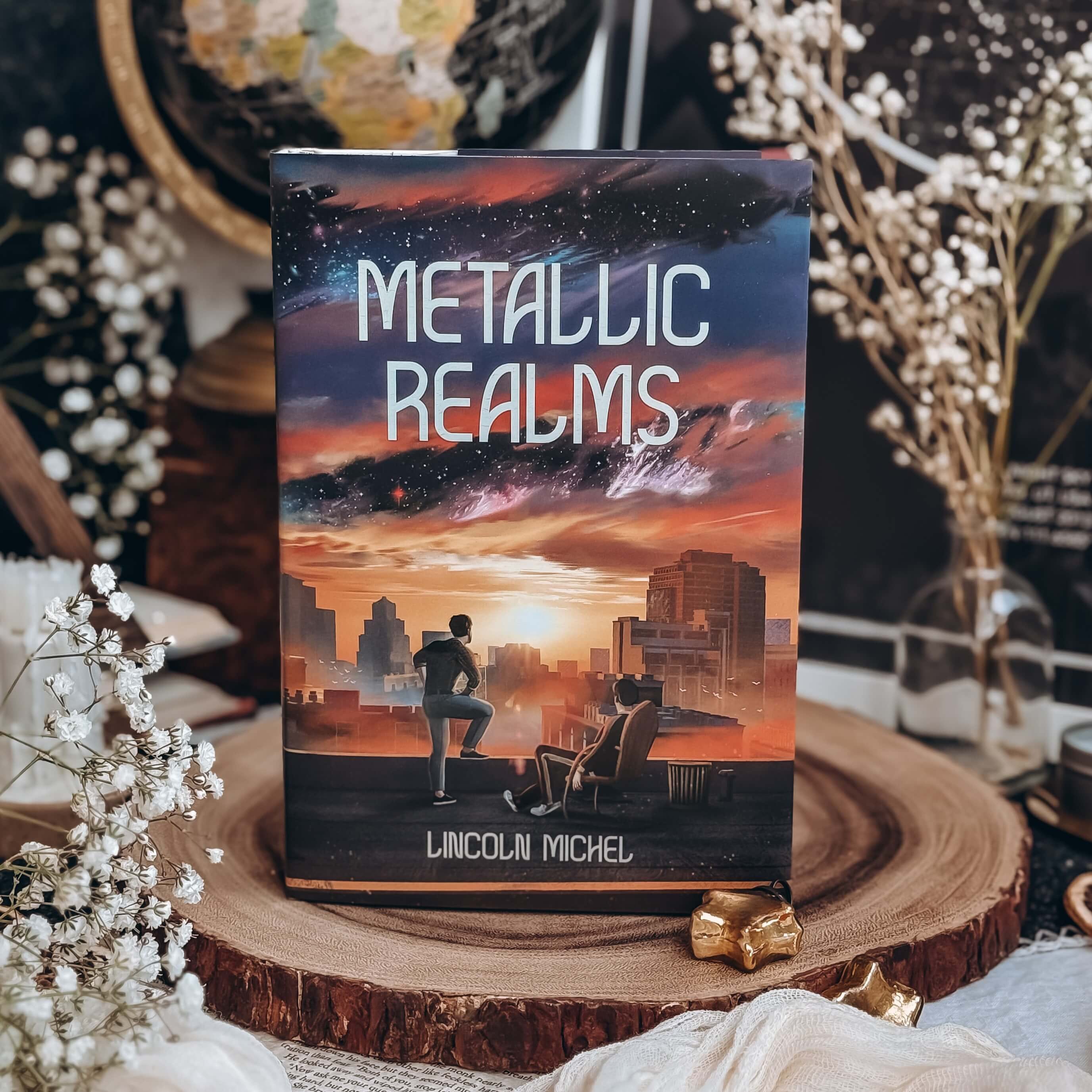
Subscription Boxes / Special Editions: Books can also be sold in other editions outside of traditional publishers. My novel Metallic Realms received a stunning OwlCrate edition that was sent to their subscribers. Such sales are unlikely to be reported to BookScan, and if they were, they would be under a different ISBN since it is a different edition and from a different publisher. (The ISBN is the code that each edition gets. Paperback, hardcover, audiobook, and ebook all have different ISBNs.)
What Else Differs from BookScan and a Royalty Statement?
The above covers most of the differences between a publisher’s internal sales data and what BookScan reports. But a royalty statement, and the publisher’s overall profit or loss on a book, includes other things. When a publisher buys your book, they usually acquire rights for a certain territory, and publishers can make a lot of money selling across territories (as well as other subsidiary rights). For example, if you sell “World English” rights to a US publisher, they will hopefully try to sell the rights to another English language publisher, e.g. a UK publisher. If you sell “World” rights, then the publisher will try to sell the right to translate to publishers in Italy, Germany, Japan, China, etc. The money from such sales is split—according to percentages spelled out in your contract—between the publisher and the author. This is also how it works for something like a deluxe edition from a subscription box. OwlCrate did not purchase a specific number of books from my publisher, Atria Books. They purchased the rights to publish the special edition for a lump sum. Publishers can also sell the rights to an audiobook edition to an audiobook publisher (more common in small presses as the Big 5 all sell their own audiobooks). Etc.
An author’s “advance” is an advance against royalties, which includes sales of rights. Hypothetically, an author can “earn out” their entire advance and begin receiving royalties before selling a single copy of their book to a single reader—before the published edition even appears on shelves for that matter—just through the sale of rights.
I think that about sums it up. If you’ve been wondering why BookScan sales, actual sales, and royalty statements all differ, I hope the above explains why.
Okay, back to the novel revision mines for me…
My new novel Metallic Realms is out in stores! Reviews have called the book “brilliant” (Esquire), “riveting” (Publishers Weekly), “hilariously clever” (Elle), “a total blast” (Chicago Tribune), “unrelentingly smart and inventive” (Locus), and “just plain wonderful” (Booklist). My previous books are the science fiction noir novel The Body Scout and the genre-bending story collection Upright Beasts. If you enjoy this newsletter, perhaps you’ll enjoy one or more of those books too.
I think it makes a lot of sense that fiction that appeals to Boomer readers is selling, while memoirs that appeal to millennials are getting lots of library check-outs but fewer sales! Like Lindy West, I'm an elder millennial, and I'm somewhat curious as to what all the hype is about but also going "will this book really stand the test of time? Does it merit a permanent space on my overstuffed bookshelves in my 1-bedroom apartment, or can I just get it from the library?"
In the case of Lindy West -- and probably Olivia Nuzzi -- I would wager that audio units were higher than print units. That is the typical shape of celeb memoir now.