

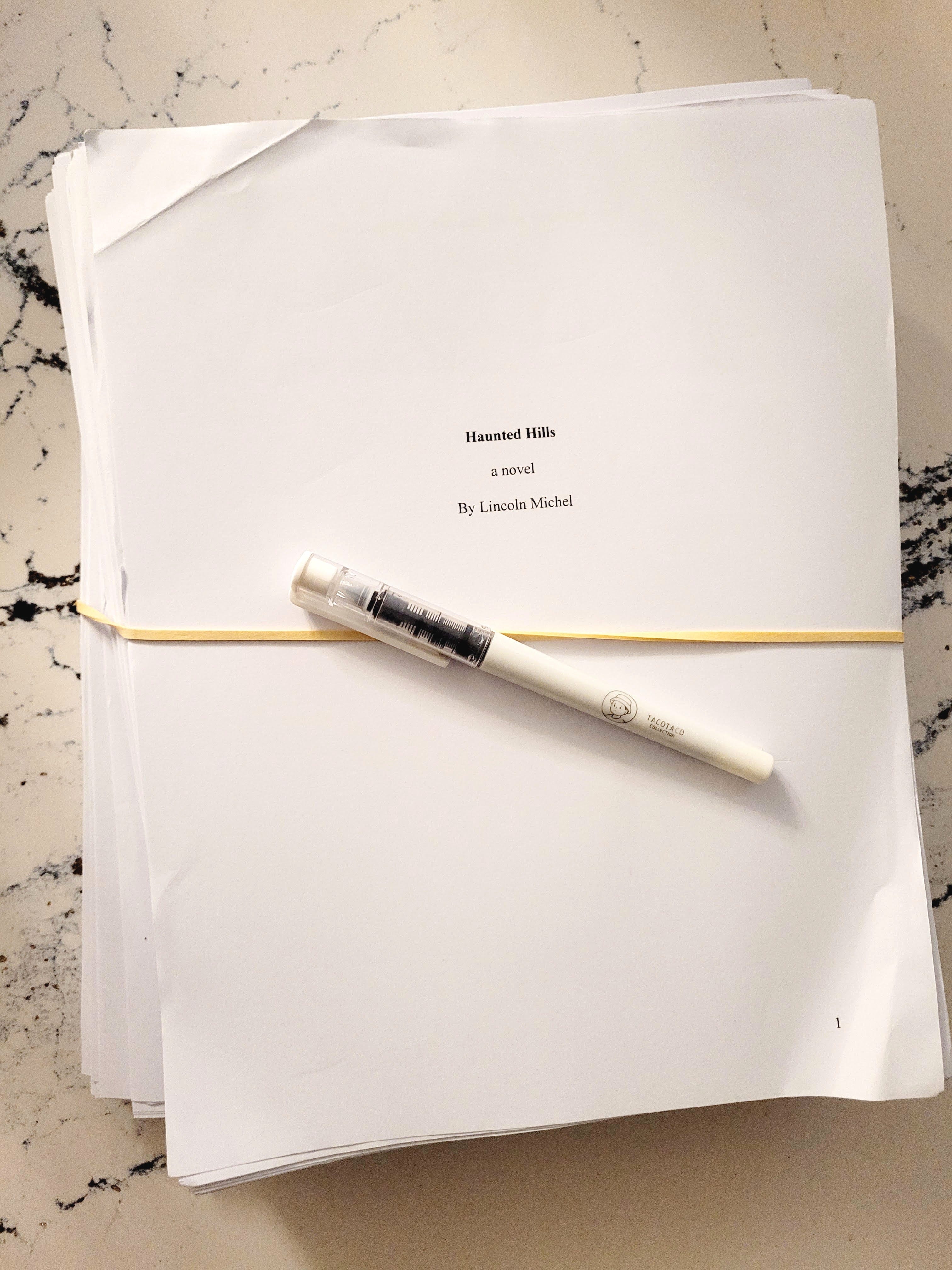
[Victor Frankenstein voice]: It’s alive! It’s alive! The horrible monstrosity is ready to be unleashed upon the world.
I mean, of course, my third novel Haunted Hills. It’s a sort of The Haunting of Hill House meets Invisible Cities novel about ghosts, real estate, and more. Expect it next fall from Atria Books. While I was furiously revising this eldritch abomination over the past few months (between full-time work and childcare) my posting on Counter Craft was a bit slower than usual. I hope to pick it up now.
Since I’m in a creepy literature mood, between my novel and Halloween approaching, I thought I’d recommend several great Gothic novels I read this year. Each of these novels is creepy, atmospheric, and appropriate Halloween reading. They are also all lush and lyrical novels. Sometimes in my corner of Substack, people complain about the lack of style in modern novels. I don’t entirely disagree. The average novel does seem to be losing aesthetic distinctiveness. Still, novels of sensuous sentences and powerful paragraphs still lurk in the corners of bookstores. If you love lush prose and Gothic grotesqueries, here are three you might enjoy.
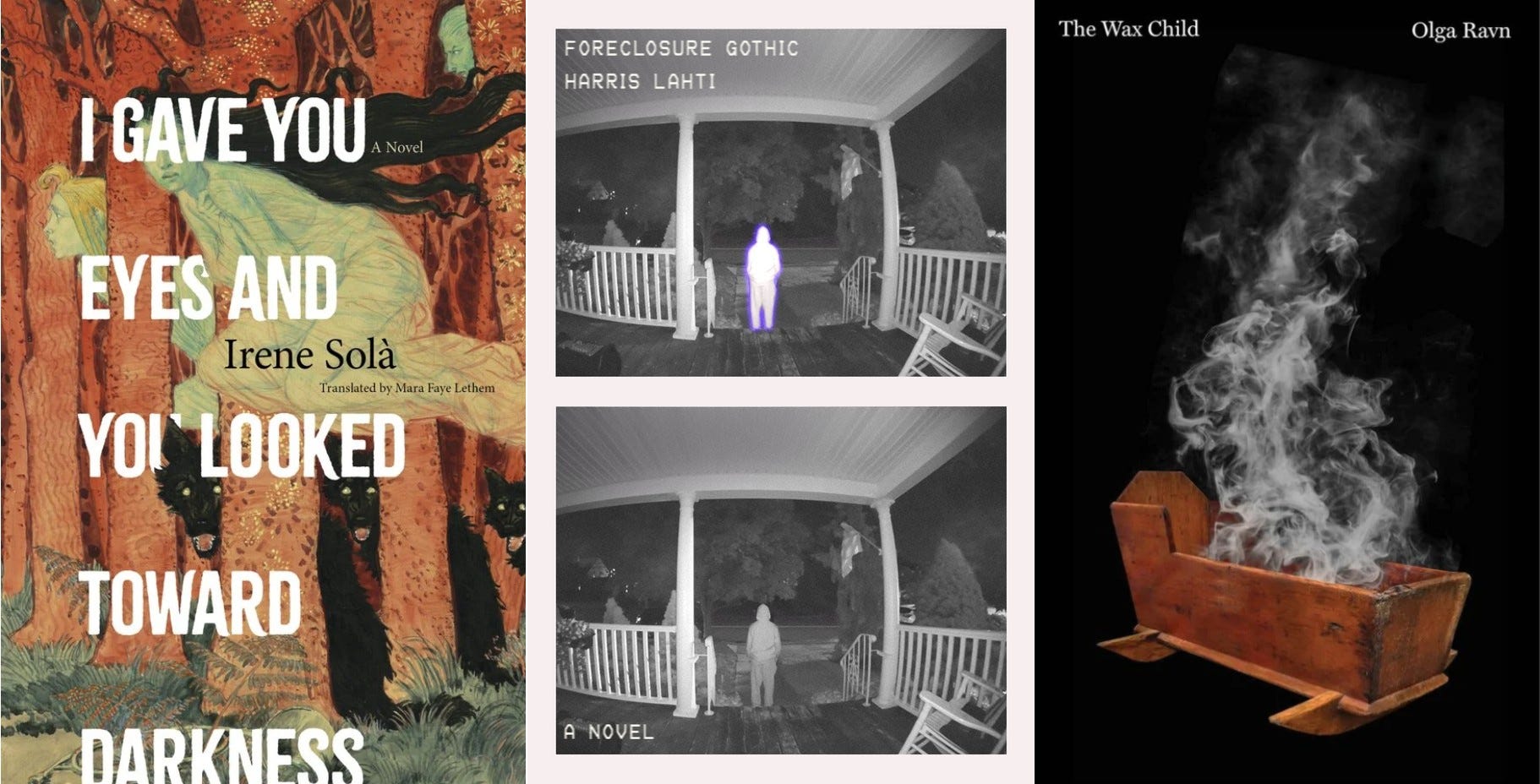
Before I get to them, one last personal announcement: Metallic Realms is out in paperback next month! If you’ve been waiting to read it in paperback and want to preorder, ask your bookstore to stock it, or buy multiple copies to fling at noisy neighbors or use as kindling this winter, please feel free!

I Gave You Eyes and You Looked Toward Darkness by Irene Solà
(Translated from Catalan by Mara Faye Lethem. Published by Graywolf.)
Sometimes, people ask me how I find new books. I have no system. I have stacks of books I’ve been sent or bought on a whim or been recommended by a friend. In this case, a social media mutual, David Dixon, recommended the book as “if BLOOD MERIDIAN were written about a family of generationally-cursed Spanish women.” That was enough to sell me.
I Gave You Eyes and You Looked Toward Darkness follows a family of women in a mountainous region of Catalonia called the Guilleries. As Dixon says, the family is cursed (the first matriarch backs out of a deal with the devil to predictably disastrous results) and the novel flows fluidly through time telling different stories of the family members and the region. The novel is filled with wolves, devils, curses, rutting animals, unholy transformations, and bodily fluids.
Solà spans a great stretch of time leading us from an era of wolf hunting and witchcraft to fascist Franco and WWII, which I thought was an interesting narrative choice. From devils from the underworld to devils of the real world. The novel includes side tales and—as with any great classic of literature—an extended fart joke. The book felt to me like a bloody and fecund1 tribute to the history of the Guilleries. I was not surprised to reach the end and see the author’s note that many of the tales were taken from legends and histories of the region. I will think about this novel for a long time.
Since I mentioned the prose, here’s a sample paragraph:
The sky clouded over. Wispy fog arrived first, frayed, rapid, flying low. Then dark and heavy stacked clouds, dragging gusts and squalls, insect-devouring birds, and cornered insects. Dry leaves and branches flew off the ground as if trying to escape. A dense hood covered the peaks. And while the clouds cut through them, the trees would shiver suddenly, as if they’d been shoved. The house, resigned and impassive, turned its back to the blackness gathering like a snorting herd on its roof.
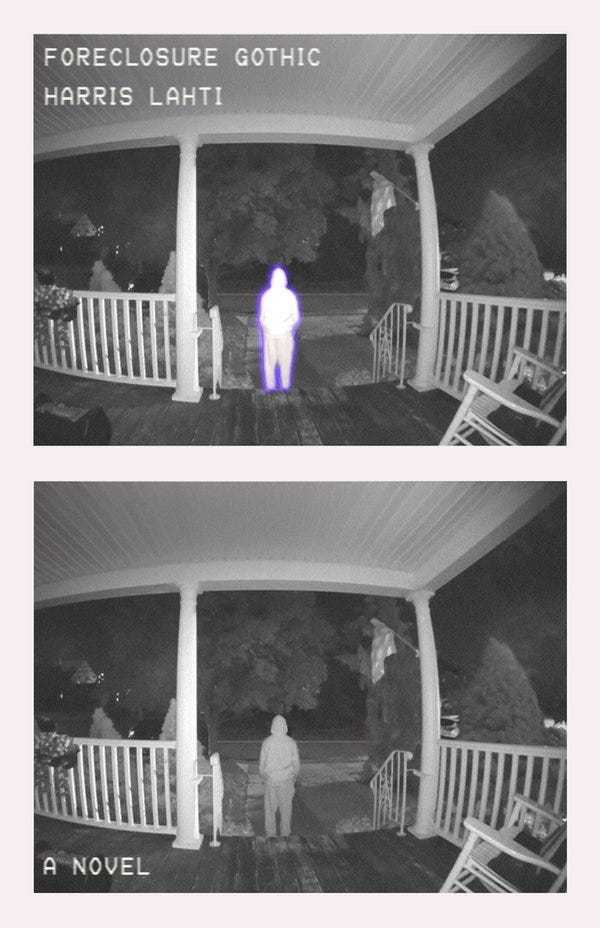
Foreclosure Gothic by Harris Lahti
(Published by Astra House.)
Full disclosure first: Lahti was a student in the very first workshop I ever taught, many years ago. Lahti was working on what would become Foreclosure Gothic then and I remember how promising the excerpts I read were. The promise was very much fulfilled. The novel follows an aspiring actor, Vic, who abandons his career and Los Angeles to flip houses in the Hudson Valley. The book overflows with creepy atmosphere and sharp-as-fangs sentences. While the book is imbued with ominous events, from finding gravestones in a basement to abnormally large vegetables, it is not a traditional horror novel with supernatural elements (something that seemed to confuse a few reviewers). It is, as the title says, a Gothic novel. A novel of mood, murk, and muck.
One interesting craft decision in Foreclosure Gothic is the timescale. A common complaint about debut novels—at least by American authors—is that they tend to be about some young person meandering around Brooklyn (or wherever) without anything happening. Often they take place over a couple days, if that, with few real events. Lahti instead covers many decades, tracking his main character (and his family) from his youth to old age. Given Lahti’s age, his depictions of middle-aged regret and elderly entrenchment are very impressive.
Without spoiling too much, make sure to stick around for the stunning scene with the sander at the end.
Here’s a passage from an excerpt you can read at Literary Hub:
Each time he passes, it’s the same. The daydream. In it, he stops, shoulders open the door to save the old woman inside from her captivity. Junior was right, it turns out, all those years ago. His son, more attentive than him, more observant than even his wife. Vic bolt-cuts the chain, then carries the old woman out the door draped in his arms. A hero. An apology. She’s nearly one hundred now, but still alive. Summer, spring, fall, regardless. In the daydream, it’s always snowing. Always there’s a news report, an article in the paper. Vic’s a hero. A handsome hero. His wife wraps him in her arms. The Olsens had been keeping their mother there, it explains, to drain her money. A dispute over the inheritance. All that wealth a corruption. The incestuous couple rotting in prison now because of him. The town will hold a parade in Vic’s honor. And when the day comes Junior’s there. They clap each other on the back, reunited on a float that rides past Sooner’s freshly raised barn. After all these years: Father, son, among the waving people. The bugle of a brass band. Heather there in her glittering vintage dress while the raining confetti mixes with the snow around them, leeching into it, dying it colors. So much confetti that somebody, somewhere, at some point, will have to plow.

The Wax Child by Olga Ravn
(Translated from Danish by Martin Aitken. Published by New Directions.)
Every novel from Ravn has been fascinating—please check out The Employees if you enjoy surreal workplace science fiction—and The Wax Child might be her best. The Wax Child is, among other things, a triumph of voice. Ravn crafts a distinct and eerie narrator in her titular wax child, who tells the tale of Christenze Krukow, a historical 17th-century Danish noblewoman tried for witchcraft.
I am a child shaped in beeswax. I am made like a doll the size of a human forearm. They have given me hair and fingernail parings from the person who is to suffer. I was borne by my mistress for forty weeks under her right arm as if I was a proper child, and my wax was softened by her warmth. After this time, she took me to a pastor; it was night, the church was dark and still, and he christened me, the wax child. I was an instrument. This was at Nakkebølle Manor, in southern Funen. My wax mouth cannot be opened.
One thing I admired in the novel is Ravn’s goal of conjuring a time when witchcraft seemed real. By that I mean the novel avoids taking the cheesy approach of “what if the victims of the witch trials really were badass witches!”, which always diminishes the true horrors of history. But nor does she present a straightforwardly revisionist interpretation of history through a lens of contemporary “realism.” In the novel, witchcraft and devils feel as real as they might have in that time and place—Ravn intersperses the text with historical documents and spells—while still presenting the trials in their misogynistic and brutal reality. It’s a tricky thing to balance, and The Wax Child more than pulls it off.
Okay, there are three good and spooky novels to read. Happy (almost) Halloween.
I’m stealing that adjective from Catherine Lacey’s blurb on the back calling it a “fecund and daring book.”
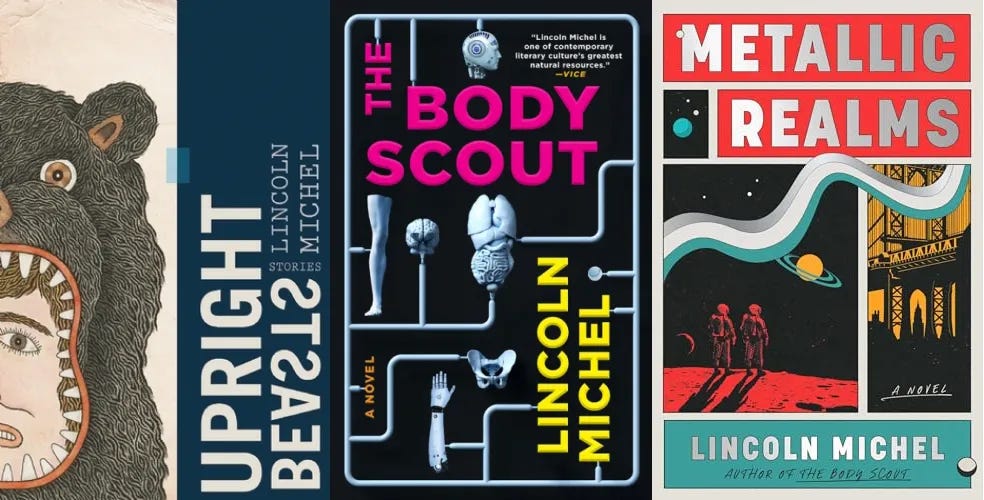
My new novel Metallic Realms will be out in paperback next month! Reviews have called the book “brilliant” (Esquire), “riveting” (Publishers Weekly), “hilariously clever” (Elle), “a total blast” (Chicago Tribune), “unrelentingly smart and inventive” (Locus), and “just plain wonderful” (Booklist). My previous books are the science fiction noir novel The Body Scout and the genre-bending story collection Upright Beasts. If you enjoy this newsletter, perhaps you’ll enjoy one or more of those books too.
No one asked but I was a volunteer reader for the Center for Fiction First Novel Prize and got "Foreclosure Gothic". There are times when you think that it is going to tip over into a full-blown horror novel but it ends up being a nice father-son story where both father and son realize in spite of themselves that father made the right choice in never going back to acting. .
Mighty thanks for this! Wonderful!