

The listless literary December is dominated by one thing: lists. There are lists of everything. Best books. Notable (whatever that means) books. Favorite covers. Worst reads. Most anticipated books for next year. Etc. For authors who published in the calendar year, every list that omits your book is a vapid collection of puerile fluff churned out by hacks and celebrated by illiterate fools! On the other hand, each list where your work appears is a rare ray of sanity curated by the last remaining readers of taste and sophistication.
I kid, a bit.
But on that last note, I truly was honored to see Metallic Realms atop The Speculative Shelf’s Top 10 Books of 2025 list last week. And this week I was thrilled to find that Metallic Realms made the shortlist for the Tournament of Books. I’ve followed the Tournament of Books for years, and it’s the rare event where you can see commercial bestsellers compete against Booker winners and experimental novels on small presses. Here’s the shortlist. I’d love it if you vote for Metallic Realms in the poll at the very bottom of the page. (The poll doesn’t pick the winner, but decides which books return for the “zombie round” before the final.)
Like everyone else, I’m going to do my own best-of-the-year list. To make it a little different, I’m listing my favorite books that I read in 2025 that were not published this year. Frankly, I have too many writer friends—many of whose 2025 books I haven’t gotten to yet—and anyway I cannot pretend to have read enough books to rank the best of the year. That’s true every year, but especially this year when my wife and I had a child. As wonderful and wondrous as she is, and she is both of those things, a baby doesn’t exactly give one more time to read.
Many of these books inspired Counter Craft posts while I was reading them, so this post will double somewhat as a round-up of Counter Craft articles from this year.

Under the Net by Iris Murdoch
Recently, I wrote about philosophers who wrote novels and novelists inspired by philosophy. These are two of my favorite subgenres of books. Yet I’m embarrassed to say that I hadn’t read the novels of Iris Murdoch, one of the most famous philosopher novelists. (I had read some of her philosophy fwiw.) I decided to pick up Under the Net, mainly because my friend John Dermot Woods happened to be in the middle of the novel when I mentioned I wanted to read a Murdoch. Also, the bookstore I went to was out of The Sea, the Sea.

While I get the impression that Under the Net isn’t among the favorites of Murdoch heads, I had a grand ol’ time with it. I suppose I didn’t know what to expect with a Murdoch novel, but I certainly didn’t realize it would be this comic and this…. wacky. The novel veers between philosophical musings—the title alludes to Wittgenstein—to almost manic Marx brothers slapstick. At one point, the main characters are doing jujitsu and lighting fireworks to escape a riot on a Roman era film set while dragging around a stolen celebrity dog. Overall, the novel moved in a freewheeling way with Murdoch switching tones and moods to always keep me engaged and surprised. The mooching, lazy, and buffoonish main character, Jake Donaghue, is a good example of another favorite subgenre of mine: “the piece of shit narrator” novel. I expect I’ll be reading more Murdoch in 2026.
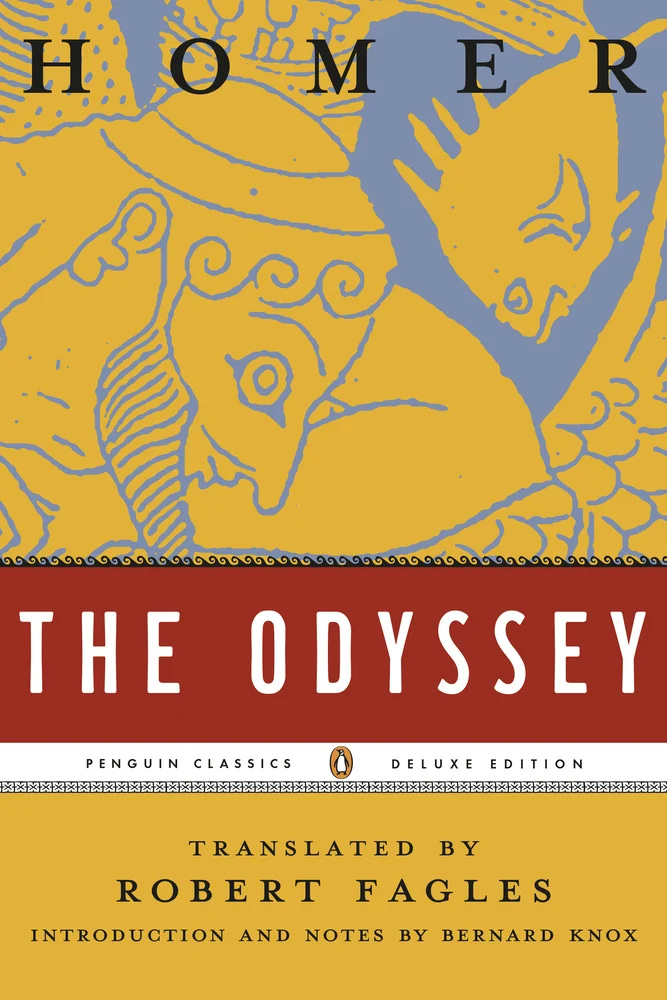
The Odyssey by Homer (translated by Robert Fagles)
I know it is not a shocker to say that The Odyssey rips. But somehow, despite being obsessed with Greek mythology at several points in my life, I had never read Homer. I decided to rectify that this year and—I swear I’m not looking to rekindle the recent Substack audiobook debate—figured I might as well listen to a poem that was passed down orally. I chose the Fagles translation because I’ve heard it is the most poetic and it was read by Ian McKellen.

While I was familiar with every plot point, The Odyssey surprised me with its structure and language. I did not realize the tale would begin with Odysseus’s son Telemachus and take quite a while to get to “the man of twists and turns” himself. I’ve often thought that the classics tend to be weirder, funnier, hornier, and more mysterious than one might expect. That was certainly true of The Odyssey. And the language of the Fagles translation truly is gorgeous. I listened to the book while taking long walks in the park, letting the language wash over me while I strolled through nature (such as one can find in NYC). It was a lovely experience. You probably don’t need me to tell you The Odyssey is great, unless you happen to be someone who also hasn’t gotten around to it. You won’t regret rectifying that.
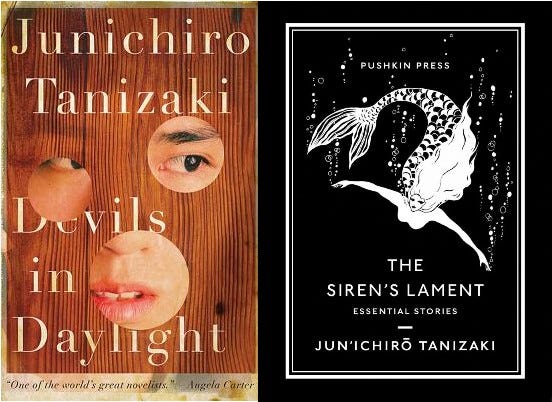
Devils in Daylight and The Siren’s Lament by Jun’ichiro Tanizaki
When I started reading Devils in Daylight, I realized I’d read the novel already in a different edition with a different cover. I have never accidentally read the same book twice before. For whatever reason, Devils in Daylight did little for me when I first read it during the 2020 COVID lockdown. I remember thinking it was a mystery without much mystery. This time, I was gripped. I loved the removed narrator, who wants to disentangle himself from his friend’s obsessions with a possibly murderous woman, and the exploration of darkness and desire.
I followed it up with another Tanizaki, The Siren’s Lament, which is three long short stories. Each was great and refreshing. The stories were so different in form and execution from the contemporary fiction I read. Not a surprise, perhaps, given that Tanizaki started writing during the end of the Meiji era when Japan was rapidly changing and absorbing elements of culture from around the world into its own unique traditions.
I will say that in these four tales there is a clear, um, obsession with obsession and especially erotic obsession that destroys men. The novel and the first two Siren’s Lament stories all center on male characters who are led astray by evil women (often with the help of evil men). The first Lament story, “The Qilin,” is set in China and features Confucius trying and failing to turn a nobleman who is controlled by his torture-loving wife. The second, and strongest, tale is set in Japan and follows a servant boy who is led into a world of crime by his master’s daughter. The last tale doesn’t feature an evil woman, but does describe a wealthy and decadent Chinese nobleman who purchases an enchanting Western mermaid from a traveling merchant. I enjoyed each one.
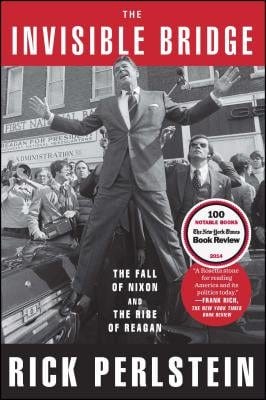
The Invisible Bridge: The Fall of Nixon and the Rise of Reagan by Rick Perlstein
The third entry in Perlstein’s history of the modern American conservatism is, like its predecessors on Nixon and Goldwater, a sharply written and illuminating account of how the American conservative movement got to where it is today. The Invisible Bridge was written before the current president even ran for office, but you cannot read this book or Nixonland—read that first—and not see countless ways that the modern GOP and Trump are direct outgrowths of Nixon, Reagan, and the right-wing currents of the 60s to 80s. Anyone who asks “how did we get here?”, regardless of your politics, should read them. But even beyond their prescience, Perlstein’s books are just great reads. He’s a witty writer with a sharp eye for telling details and surprising anecdotes, and for weaving those into larger narratives. A good balance of storytelling and scholarship.
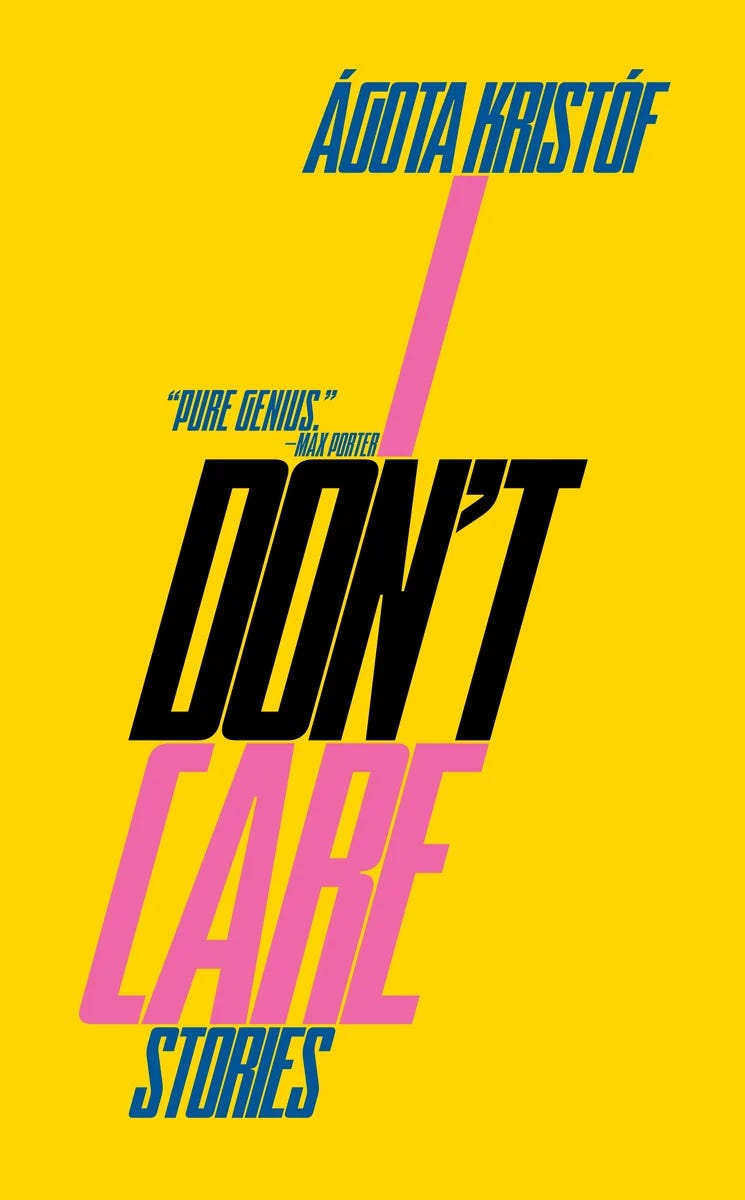
I Don’t Care by Ágota Kristóf (translated by Chris Andrews)
I am suddenly realizing how weird this list is, lurching from ancient heroic epic to 20th-century Japanese literature to American history to now weird Hungarian flash fiction. This is pretty representative of how I read though. Anyway, Kristóf is a Hungarian writer who died in 2011 and I Don’t Care collects some of her surreal, dark, poetic, and often funny parables. Reading them brought to mind both Franz Kafka’s parables and the work of Russian absurdist Daniil Kharms. If you like those writers, you might love these short tales.

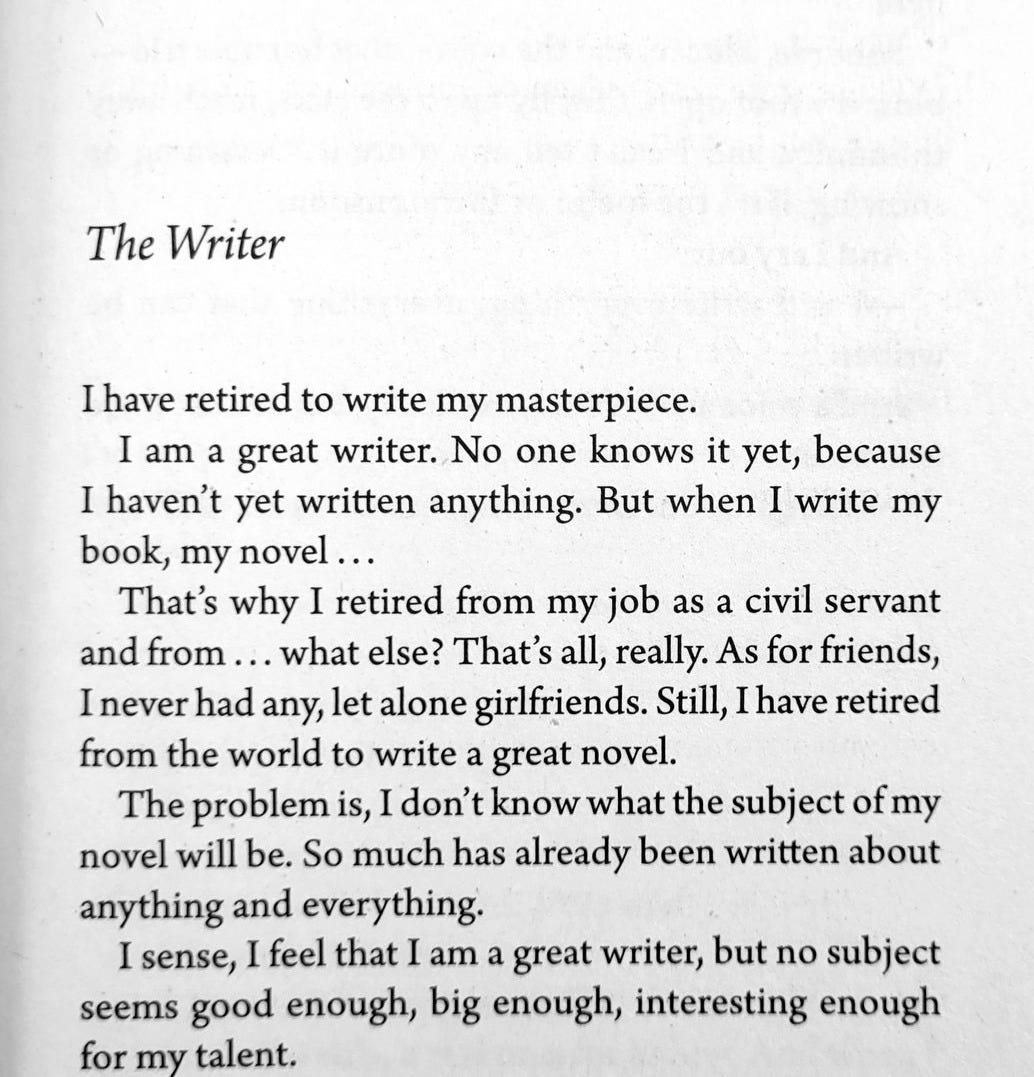
Here’s the start of one story that fellow Substack writers might love or else feel read for filth:
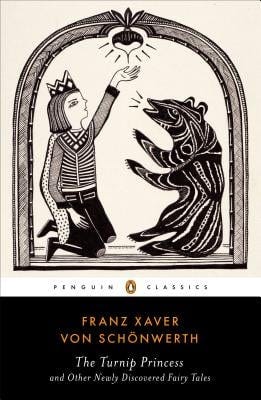
The Turnip Princess and Other Newly Discovered Fairy Tales by Franz Xaver Von Schönwerth (translated by Maria Tatar)
When my daughter was born, I wanted to get into the habit of reading to her every night and what better place to start than with fairy tales? I read a tale or two from The Turnip Princess each night. These old Bavarian tales, with their strange mermaids, dark woods, and headstrong heroes (normally named Hans) added a bit of fairy tale magic to those early months.


Schönwerth was a fairy tale collector in the vein of the Grimm brothers, scouring mid-1800s Bavaria for tales of magic and morals. Somehow, a bunch of his collected stories were lost for decades until discovered in 2009. The Turnip Princess is a collection of those lost tales. Like the original Grimm stories, these fairy tales are more violent, sexual, and structurally strange than what Disney has turned fairy tales into. I loved these for all the usual fairy tale pleasures, but also for how feral and foreign they felt. As I put it in an article, they are fairy tales from before fantasy became codified into tropes.
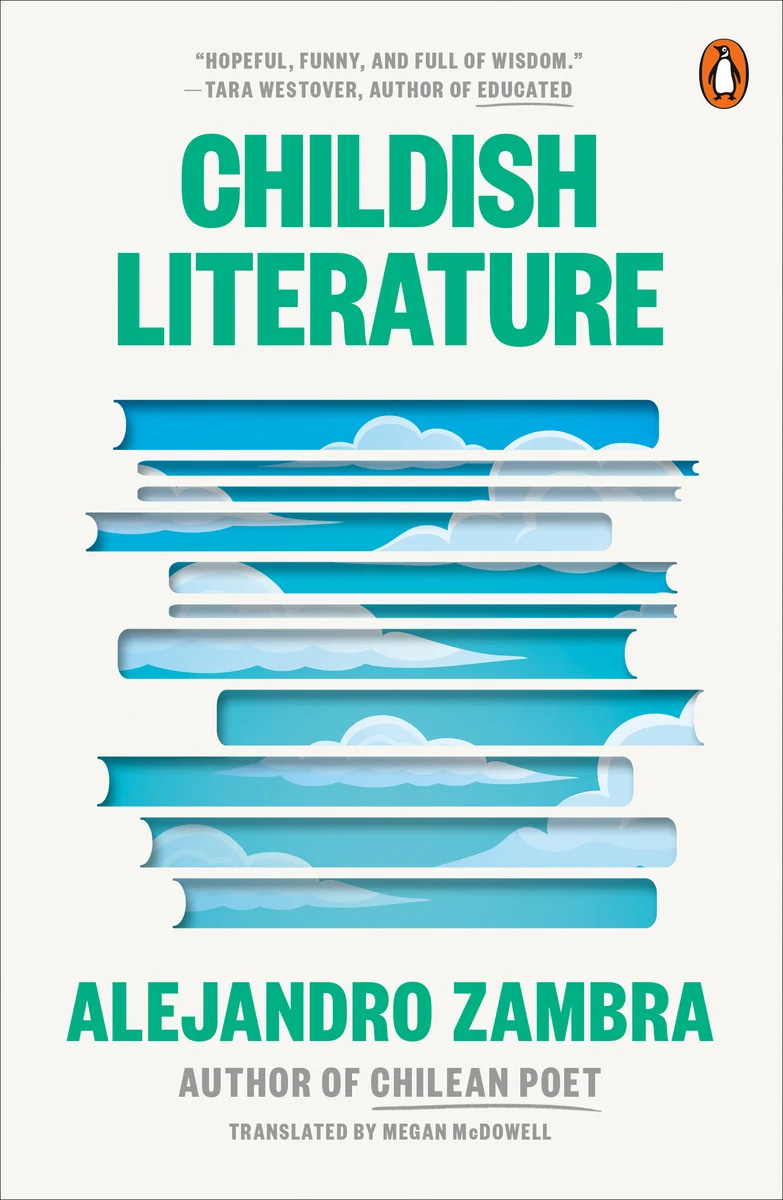
Childish Literature by Alejandro Zambra (translated by Megan McDowell)
Alejandro Zambra is one of my favorite contemporary writers, but I’ll say up front I don’t think Childish Literature is one of his best books. (My favorites are Multiple Choice and My Documents.) This collection of stories was, however, almost tailored for me this year since the stories—and essays and poems, it’s a hybrid collection—center on an author around my age becoming a father and grappling with questions of parenthood, art, aging, and just plain old life. The mixed nature of the collection did result in a mixed bag, but there are some excellent pieces in the collection and overall it was the kind of book I needed to read this year.

Actual Air by David Berman
I’ll end with some poems. David Berman, if you don’t know, was a brilliant lyricist and musician. He was part of Pavement and front man for the Silver Jews and Purple Mountains. Like most millennials who had even a fleeting interest in indie rock, I love his music and especially his lyrics. His last album has some of the most beautiful and devastating songs I’ve ever heard with lyrics to match (Lately, I tend to make strangers wherever I go / Some of them were once people I was happy to know). Berman is such an iconic figure in my circles that I feel I can’t even do justice to him finishing this post on Thursday night. I will just say Berman’s music is filled with witty and haunting lyrics that are as poetic as, well, the poetry in this book.
I’ve long loved Berman’s poetry but had never read the entirety of Actual Air until this year, mainly because it was long out of print. I read a few poems at a time to my daughter, after the fairy tales ran out. I found myself slipping into a version of Berman’s deadpan drawl. Berman imbues Americana with a surreal beauty, and writes in a way that sounds simultaneously like a prophet shouting in a dime store parking lot and an old friend a few whiskeys deep leaning over at the bar to tell you a painful secret. These filled me with sadness and hope. I don’t know what else to say. I loved them. You might too.
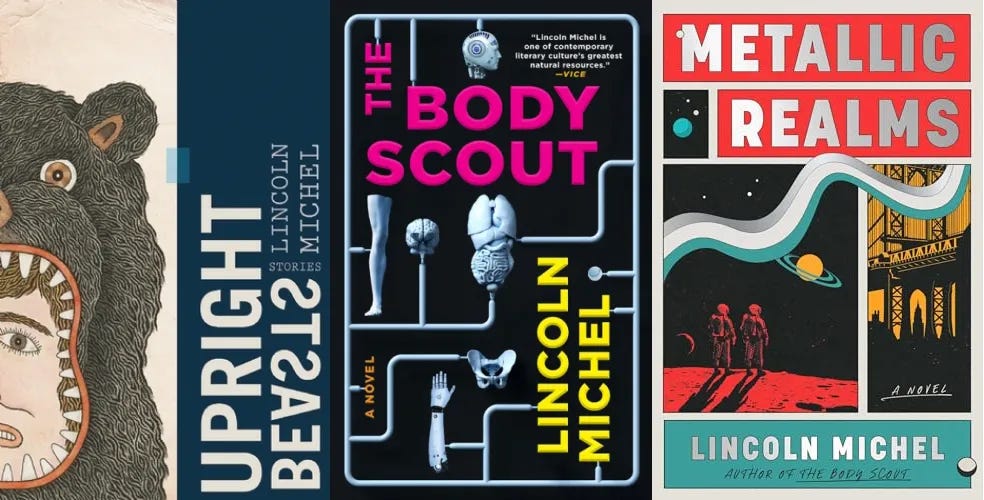
My new novel Metallic Realms is out in stores! Reviews have called the book “brilliant” (Esquire), “riveting” (Publishers Weekly), “hilariously clever” (Elle), “a total blast” (Chicago Tribune), “unrelentingly smart and inventive” (Locus), and “just plain wonderful” (Booklist). My previous books are the science fiction noir novel The Body Scout and the genre-bending story collection Upright Beasts. If you enjoy this newsletter, perhaps you’ll enjoy one or more of those books too.
I highly recommend Emily Wilson's two translations of both The Iliad and The Odyssey. The Odyssey is my favorite book of all time
"I’ve often thought that the classics tend to be weirder, funnier, hornier, and more mysterious than one might expect." Found this to be true over and over. I read Don Quixote in college out of a sense of obligation and then got to the part where him and sancho panza start throwing up on each other's faces and was like WTF IS THIS you mean classic literature is allowed to do this? it's fantastic