

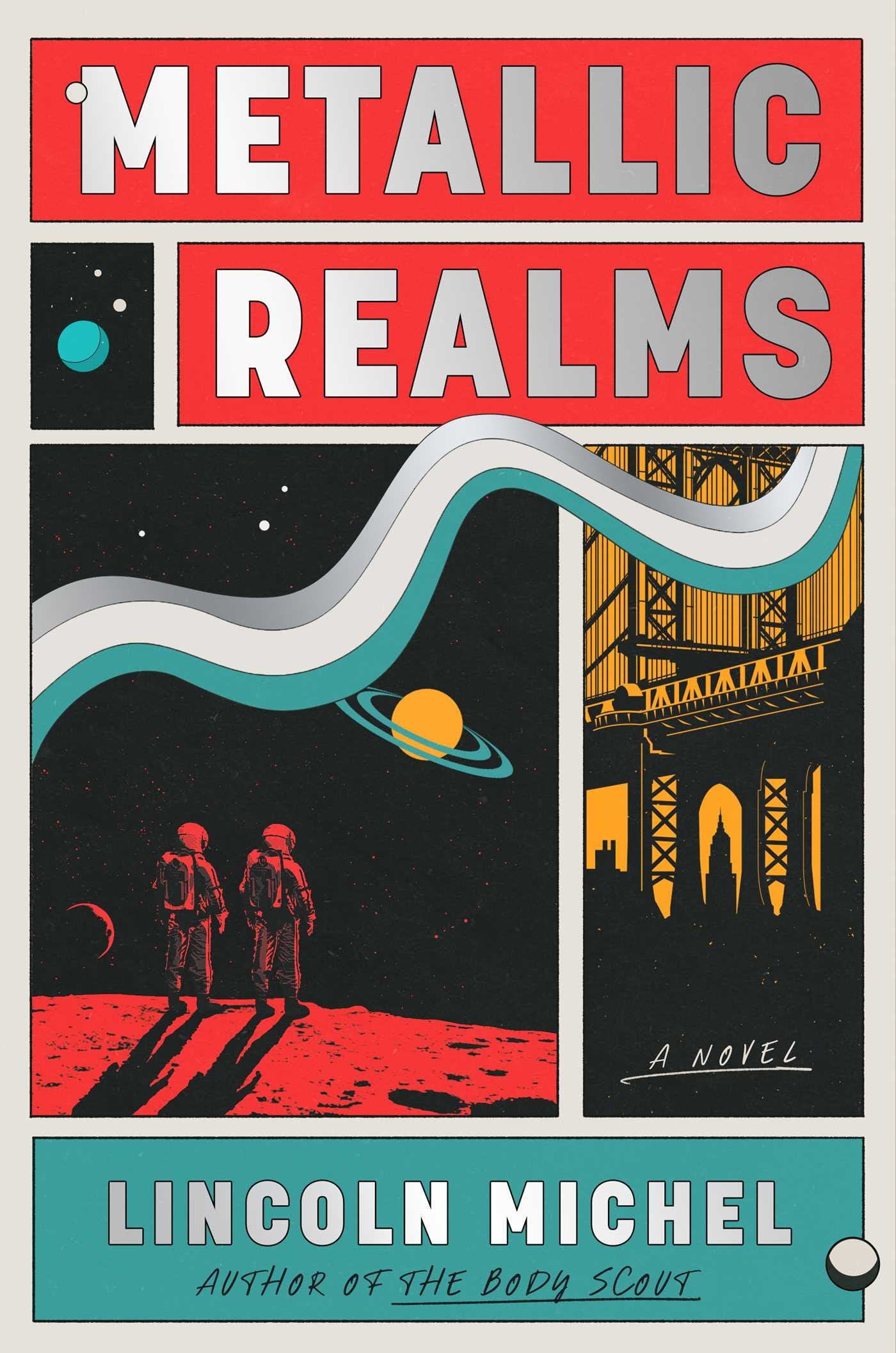
Today, I’m talking fairy tales. Although before I do, a reminder that my new novel Metallic Realms is out in stores! The reviews so far have been very flattering: “Brilliant” (Esquire), “riveting” (Publishers Weekly), “hilariously clever” (Elle), “I left this book feeling … assured of the future of storytelling” (The Masters Review), and “Just plain wonderful” (Booklist). You can also read an excerpt of the novel in the excellent Substack magazine The Metropolitan Review.
Now, let me transport you to a land far away and once upon a time…
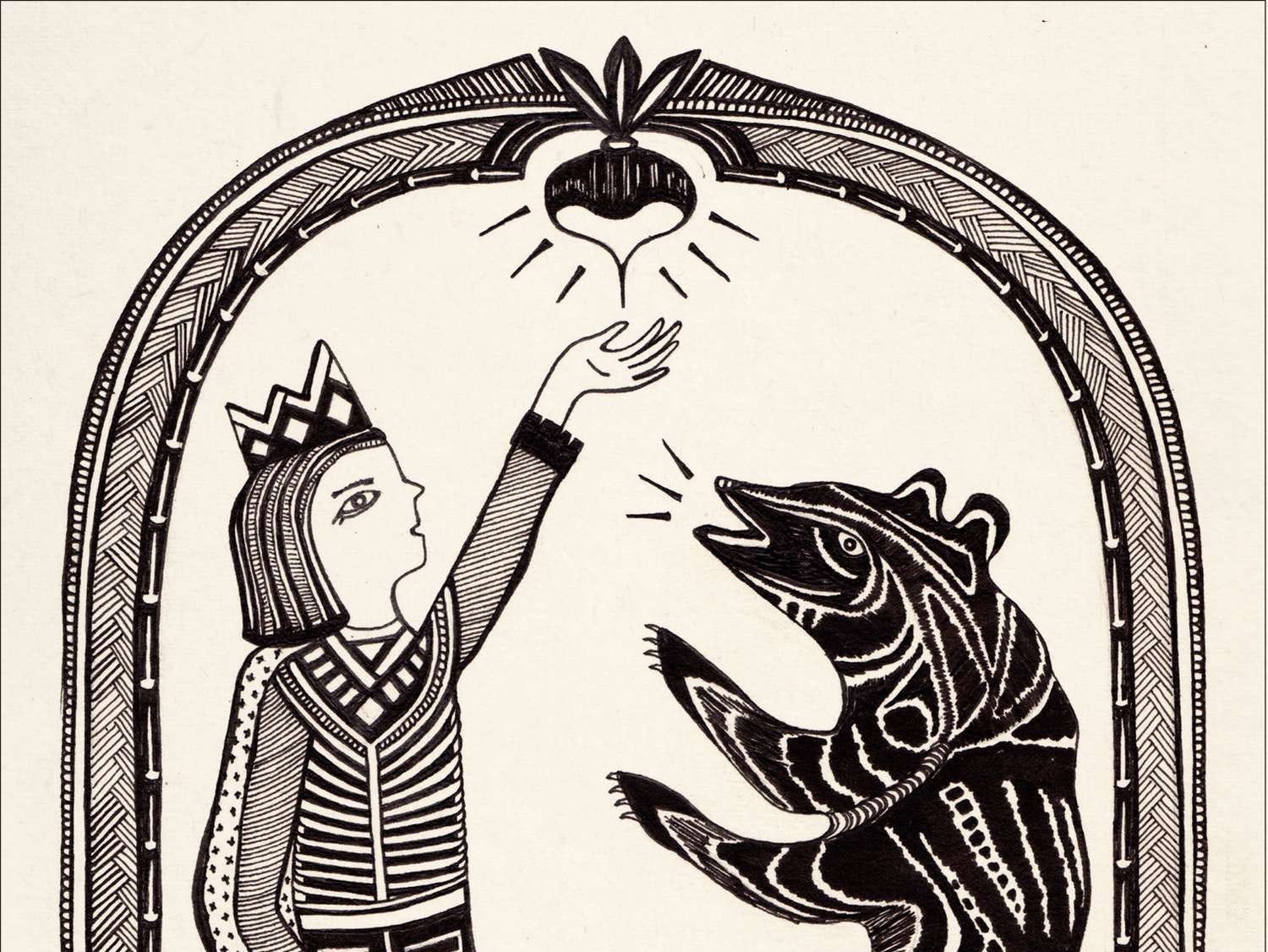
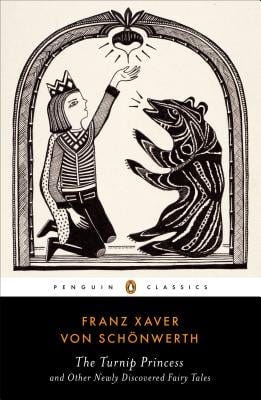
Recently, I’ve been reading a couple fairy tales each night from a lovely and odd collection called The Turnip Princess and Other Newly Discovered Fairy Tales. These are traditional German tales collected by Franz Xaver Schönwerth in the 19th century, but “newly discovered” because the fairy tale manuscripts were locked away in an archive for 150 years without anyone apparently looking at them. Schönwerth was a contemporary of the Brothers Grimm, and his fairy tales have the violent, dirty, and proto-surreal feeling of the original Grimm tales.
I stress original because (as many Counter Craft readers likely know) the earliest Grimm fairy tales went through a series of sanitizing edits—initially by the Grimm brothers themselves after the first volume was criticized as unsuitable for children—until they became the family friendly Disney tales most Americans know today. Schönwerth’s tales have all the unedited Grimm insanity that, as I’ve written before, give me the impression that fairy tales were often less moral lessons for children and more akin to dirty jokes or shaggy dog yarns. But something else has struck me while reading The Turnip Princess. I am consistently surprised with the magical elements of the story. The tales contain all the magical creatures I’ve come to expect from Western fantasy like wizards and dragons… and yet the magic is unexpected and unpredictable. It is fantasy before tropes.

Of course, in some ways fairy tales are very “tropey,” as the kids might say. They’re famously catalogued in specific numbered types and systemized by scholars. Even The Turnip Princess tales have their official ATU #s listed in the back. But the tropes of these fairy tales are mostly in the archetypes—the beautiful princess, the three brothers, the good-natured but troublemaking strongman (often named Hans), etc.—or else in plot points. Several tales in The Turnip Princess involve men promising away “that which you do not know you have” and returning home to learn their wife is pregnant. Many have beautiful princesses or princes turned into animals or monsters.
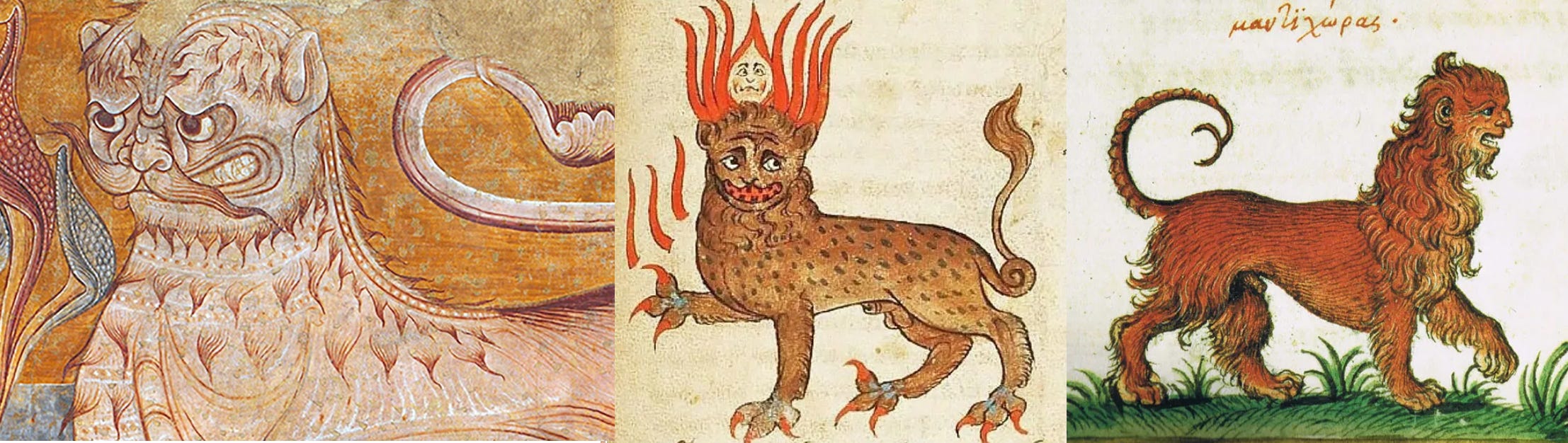
Yet the magical elements themselves are often bizarre. The dragons, wizards, and other fantasy creatures had yet to crystalize into the fantasy “tropes” of today. One tale’s dragon may bear little relation to another tale’s dragon. It is almost as if each storyteller is conjuring up these creatures from the vaguest concepts, like medieval European monks drawing lions from mistranslated descriptions.
Take the story “In the Jaws of the Merman.” There is a village near a beautiful lake where lovely local girls swim. Other girls from other towns who try to swim in the water drown. Suitors come to marry the beautiful locals. Then they all freak out:
It turns out that there was something not quite right with the girls— they had fish scales. A judge appeared on the scene with his officials, took a look at the brides, and ordered all of them to be burned at the stake at once. As the flames were licking the stake, tall waves rose up and washed into the village, and a huge head emerged from the waters. It spewed water like a whale and put out the fire. The brides all walked across an arc of water as if it were a bridge leading from the woodpile back to the water and then into the gatelike jaws of the merman. Since that time girls no longer swim in that lake.
There’s lots of fairy tale fun here, including the no-nonsense fable swiftness of a judge simply “appear[ing] on the scene” with no other explanation. But what stands out, pun intended, is the merman being so gigantic he can swallow all the brides inside his mouth. This is a far way from the beautiful trident-carrying merfolk of Disney films, superhero comics, or countless fantasy novels. Merfolk are recurring in The Turnip Princess, and they are different each time. Sure they all live in water of some type, but that is about it for commonalities. In one story, they are summoned by throwing plums. In another, they are ghost-like entities that murder brides. Even their basic appearance changes, sometimes having scales and a fish tail yet other times “feet like a goose, webbed with little claws at the end of each toe.”
The same is true of other magical creatures, such as the dragons that appear sometimes covered in scales and other times feathers. Sometimes they are huge and other times they seem human-sized with human wives. A great tale that combines mermaids and dragons is “The Red Silk Ribbon.” I will skip ahead to the end. A mermaid who has been lurking in a river is foiled in her attempt to steal a man named Lucas and the following happens:
[The mermaid] emerged and threw a handful of blue sand into the princess's face, and the princess turned instantly into a dragon.
The kingdom was in trouble once again. The king offered half his wealth to anyone who could come to his aid. An ancient magician appeared and promised to help as long as the princess could endure the procedure. He had three ovens built and heated them up until each was hotter than the next. He pushed the dragon into one and took it out again. Its skin was soft, and he cooled it down in water. When he put the dragon in the second oven, its skin split open, and when he pushed it into the third oven, Lucas had to hide because he weeping and wailing was so heart-wrenching.
The princess emerged naked from the oven, and Lucas threw his cape around her and led her home triumphantly. They lived happily together, and they were carefree now that the mermaid no longer had any claim to them.

There’s no fussing about “worldbuilding” here. Why can mermaids turn you into a dragon with blue sand? Why do multiple oven bakes undo the spell? Who cares? This is magic after all and an ancient magician just appeared….
If you enjoy old fairy tales, pick this up.
Reading the stories also made me think about how I miss weird and unexpected magic in fantasy fiction where, in the Anglo-American sphere at least, the shadow of Tolkien looms so large. Tolkien’s original works carry this surprise. His creatures are pulled from myths and legends but reworked into his own original creations. But so much fantasy since has been hardened into worldbuilding rules and expectations so that dragons, merfolk, wizards, elves, and so on appear nearly identical even in entirely different fantasy universes. The popularity of fantasy RPGs and video games from D&D to today certainly sped this along. Games depend on rules, after all. Still, there is something decidedly unmagical about how magic seems to work more or less the same in every major fantasy franchise. If I want to watch some fantasy on TV, for example, the supposedly wondrous and fantastic worlds of Rings of Power, The Wheel of Time, The Witcher, House of the Dragon, etc. all feel, well, kind of the same. I also do not think it is a coincidence that all of those franchises are based on older works that in the original forms bore some originality. (Yes, Martin hasn’t yet finished A Song of Ice and Fire…. but A Game of Thrones came out nearly thirty years ago. It’s old.)
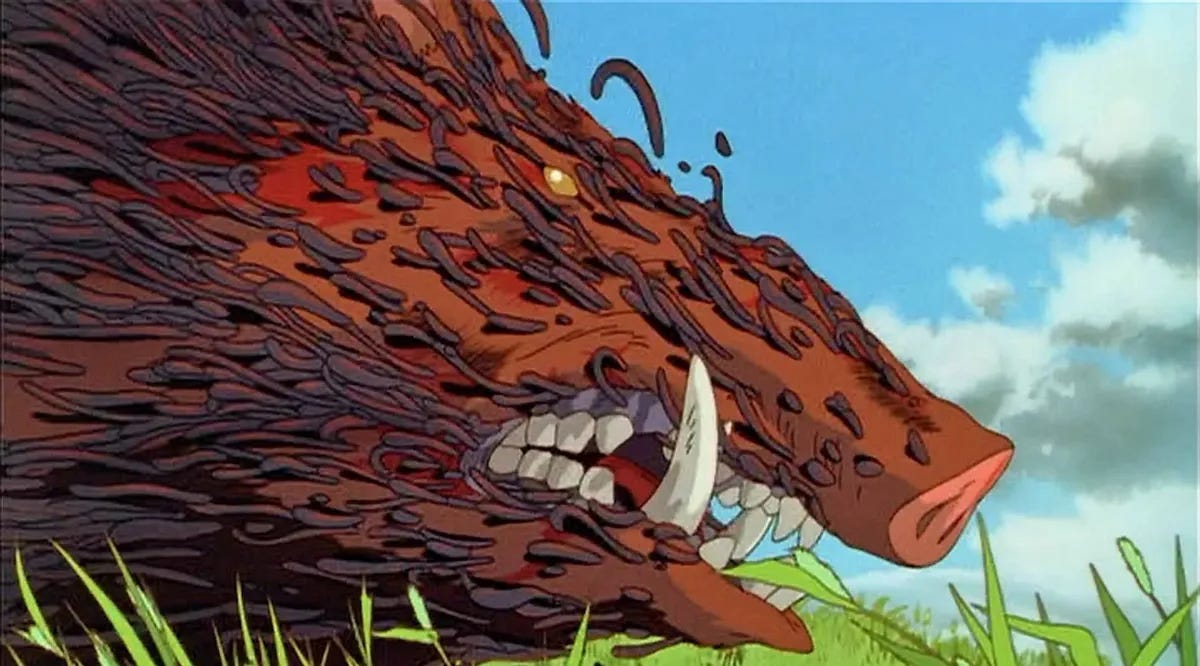
On the other hand, I rewatched some Miyazaki films like Princess Mononoke and The Boy and the Heron recently and the rules and creatures of the world felt so fresh and unexpected. Part of this is the cultural difference, of course. I was not raised on Japanese myths and tales. But part is that Miyazaki follows his own imagination even if, like Tolkien, he pulls from established legends.
This problem isn’t specific to epic fantasy. I feel something similar in a lot of horror fiction where zombies, vampires, and the like have become too routine and rule-bound to terrify. The proliferation of these monsters has made them feel smaller. Safe. It takes a truly new twist, like perhaps the fungal zombies of The Last of Us, for such monsters to feel freaky again.

As with Tolkienesque fantasy, the originals—such as Bram Stoker’s Dracula—actually feel fresher since the authors were creating before the “rules” were set. Stoker’s Dracula is a far more unusual vampire with more elastic powers than the vampires you read or watch today.
Don’t get me wrong. There is pleasure in tropes. Especially in seeing how authors can tweak and subvert them. Indeed, a major project of fantasy narratives for the last 50 years or so has been to tweak our ideas of magical creatures. Slow zombies become fast zombies. These vampires drink synthetic blood and those vampires twinkle in sunlight. What if wizards went to boarding school? What if dragons were like nuclear weapons? Some great work was produced in this vein. A lot of blah work too. But I think it might be tapped out. The subversions don’t feel that subversive anymore. Maybe it’s time to freshen up our fantasy with some new magical creations? Or versions of old creatures so far removed from their established “lore” that they feel unrelated?
Some great modern authors do this, of course. N. K. Jemisin’s fantastic and award-winning Broken Earth trilogy—a stellar series for many reasons—invents a magical world that feels totally novel while still featuring logical and thought-out worldbuilding. Jemisin does this in part by organizing her magic around a geological theme, turning wizards into earth-shakers and monsters into boil bugs and Stone Eaters. Susanna Clarke’s Piranesi feels totally singular even as it pulls from Plato, Greek myths, and Aleister Crowley. I’d love to see more fantasy, especially in film and TV, follow these leads. Show us magic that is strange, unexpected, and awe-inducing! Isn’t that the only way it will feel magical?
Anyway, those are just some fleeting thoughts I had while I read the fun and strange tales of The Turnip Princess. They feel new despite their age. You can read the titular story here. I recommend them for anyone who likes fairy tales.
Really enjoyed this, Lincoln! If you're interested in the origins of fairy tales from an anthropological p.o.v., something the Radical Anthropology Group studies in great detail (highly recommend!) and how they all stem from the "world's first myth" and (mostly female) initiation rituals among hunter-gatherers, as well as the transition from a lunar to a solar calendar with the move to agrarianism, here's a link to a short pamphlet you might enjoy (the page numbers are a bit wacky fyi) – http://radicalanthropologygroup.org/wp-content/uploads/class_text_020.pdf It's fascinating stuff! Once you see the pattern, you can't unsee it.
Congrats on Metallic Realms!
I loved this post. Coincidentally I was wondering the day before why some well written novels were lacking in a sense of wonder. Have you read Diana Wynne Jones? I'd recommend for you Fire and Hemlock, The Homeward Bounders, and Hexwood.